Henry VII (1485 - 1509) Read about Henry VII
Groats
(Old “facing” style)
WTH-7826:
Henry VII Tudor
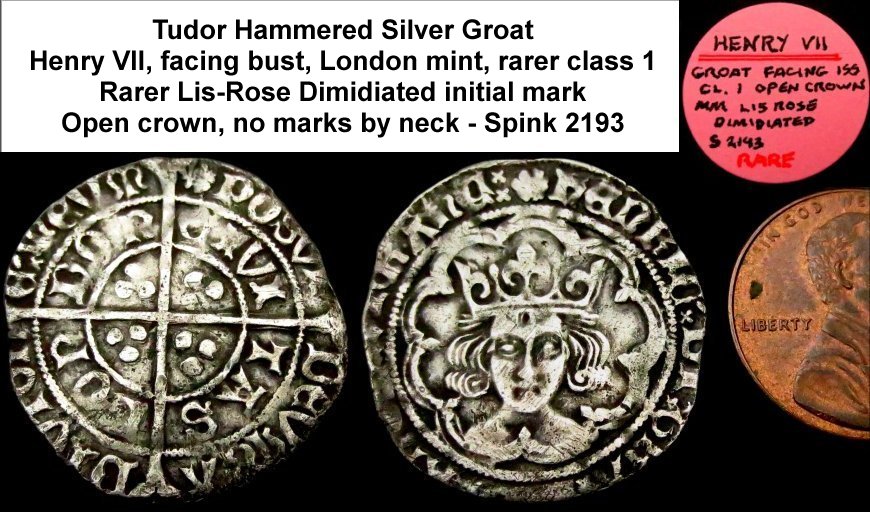
Hammered Silver Groat. Rarer facing bust, open medieval-style crown, class 1 London groat.
S.R. 2193.
The initial mark is interesting.
The Tim Owen ticket stated "Lis-Rose
Dimidiated". I see it tentatively
as a mule of obverse 41 (Lis upon Sun & Rose),
reverse 40 (Lis upon Half Rose). The latter is interesting as the Lis resembles a Trident!
Lovely grade, albeit some clipping 3-9 o'clock and the
rarer first issue. A worthy
coin! £425
WTH-7079:
Henry VII Facing
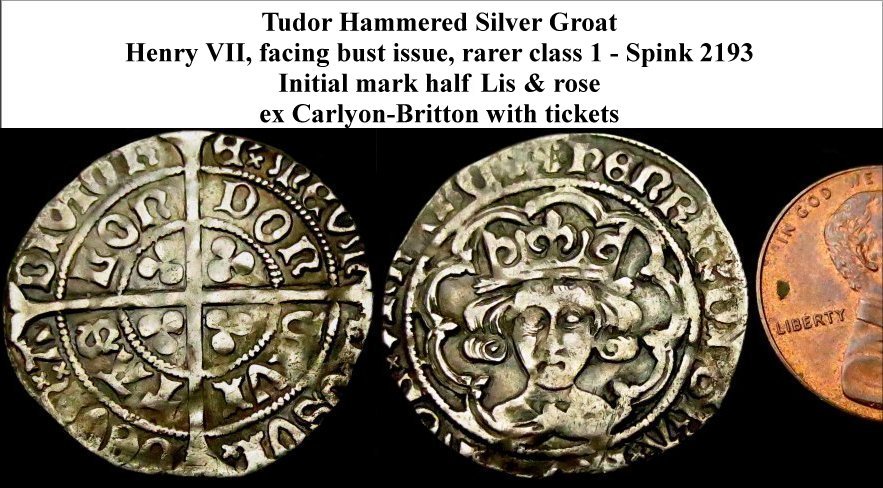
Bust Issue Hammered Silver Groat. Rarer class 1 with open crown and initial mark Half Lis & Rose.
London
mint, S.R. 2193.
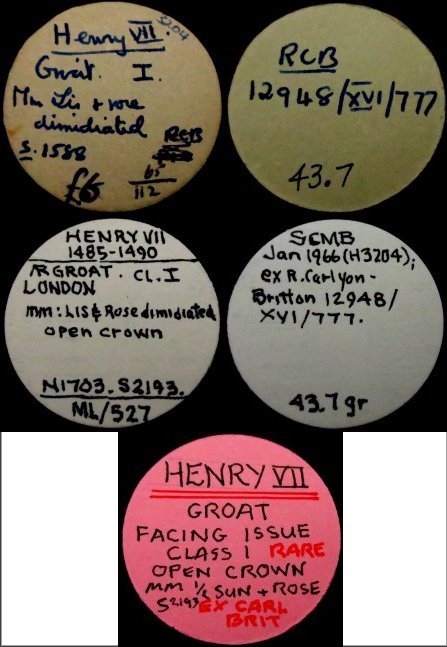
Pedigree coin (see old tickets), being ex
Carlylon-Britton collection (he looks to have paid £6
for this coin in 1965) and at least one other.
£485
WTH-7841: Henry VII Hammered Silver
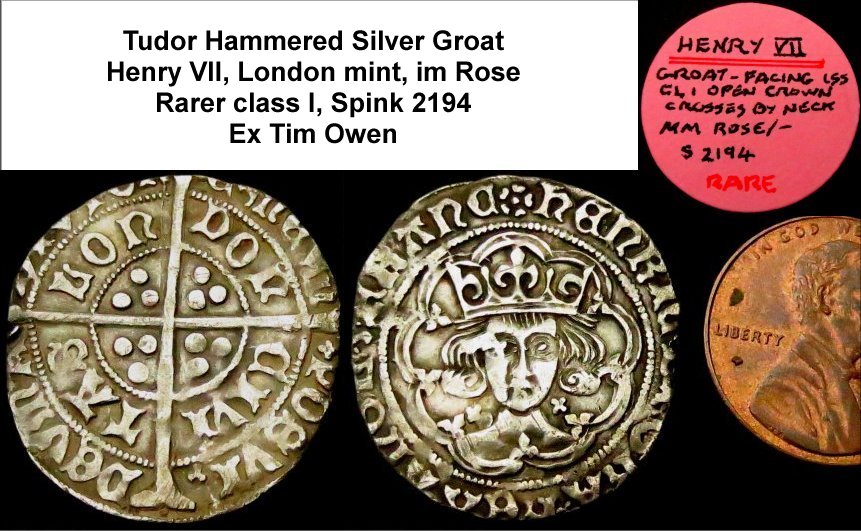
Tudor Groat. Facing
bust, open crown, rarer class 1. Initial
mark Rose (1487-8), London mint, crosses by the neck - S.R.
2194. Extra piece of
metal from the minting process. Ex Tim Owen. Excellent grade. £395
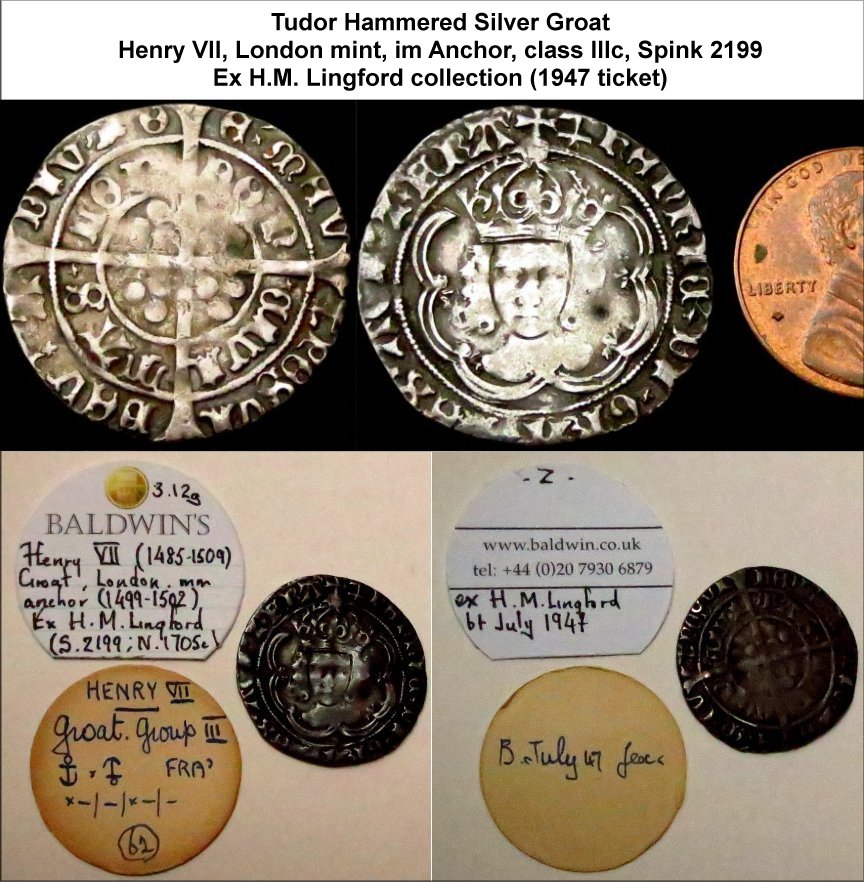
WTH-7840: Henry VII Hammered Silver
Tudor Groat. Facing bust, closed
crown, class IIIc.
Initial mark inverted Anchor / Anchor (1499-1502), London mint, one plain, one jewelled arch
to crown - S.R. 2199. Excellent
provenance, being ex H.M. Lingford collection (bought
July 1947) with original ticket. £395
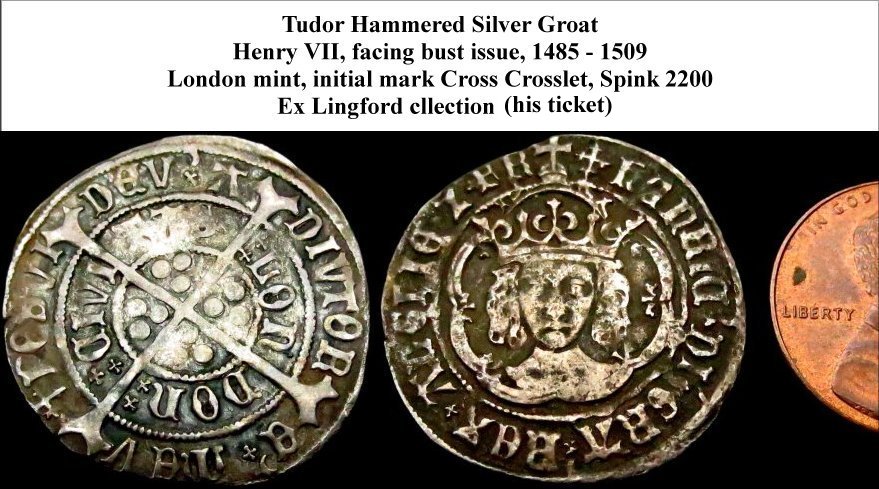
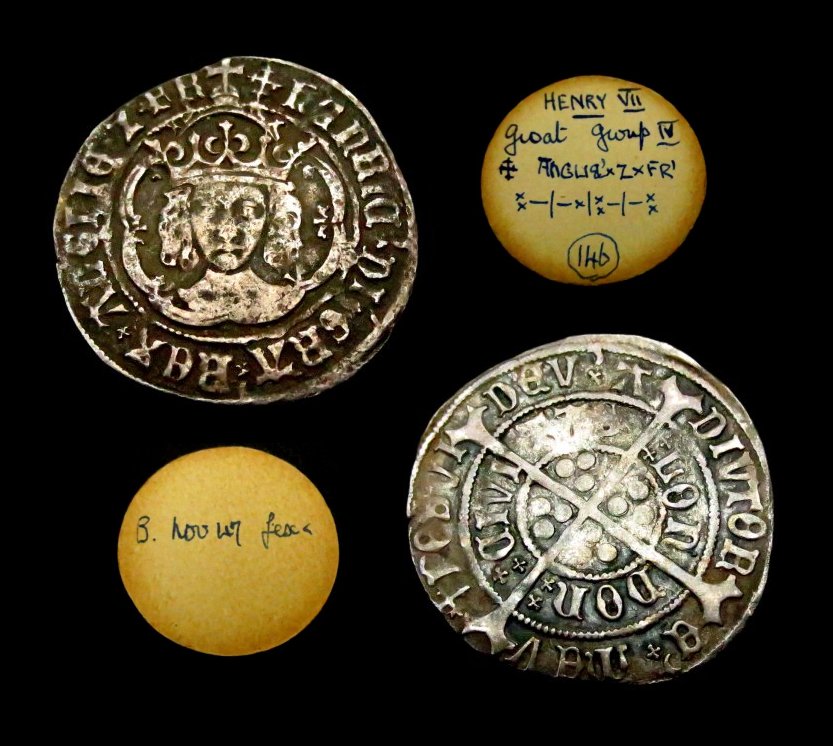
WTH-7532:
Henry VII
Hammered Silver Tudor Groat. Facing
bust issue, class IVa, S.R. 2200. London mint, initial
mark Cross Crosslet. Ex Lingford
collection with his old ticket.
£435
Groats
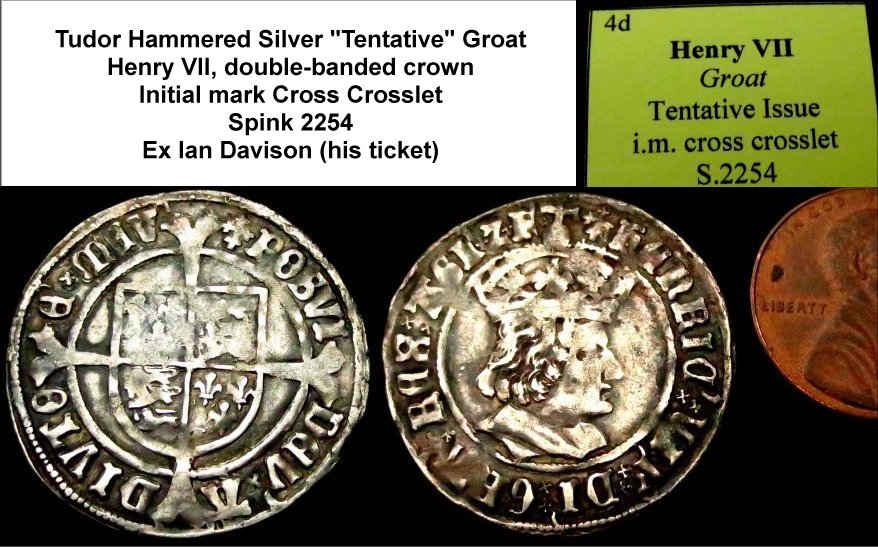
WTH-7986: Henry VII Hammered Silver
TENTATIVE Issue Groat. Initial mark Cross
Crosslet, 1504-5, Tower mint, London -
very much contemporary and issued alongside the old-fashioned facing bust
types. Double banded crown, youthful features: S.R.
2254. It can not be overstated how
radical a change this new profile coinage was at the time, something that
obviously went further under Henry VIII, Edward VI, etc, but most definitely
started here. Together with the testoon and the new gold sovereign, the Tudors under Henry
VII drew a serious line under the previous 200+ years of how the Medieval lot did things!
The Scottish experimented with side profile coinage, albeit to a far
lesser extent (a fraction to the left of front facing!) slightly earlier than
this under James III (1485) but it took until James V in 1526 to go the whole
hog and issue virtually a duplicate of this tentative groat. A highly sought after and
collected coin. £965
Provenance:
Ex Ian Davison
Halfgroats
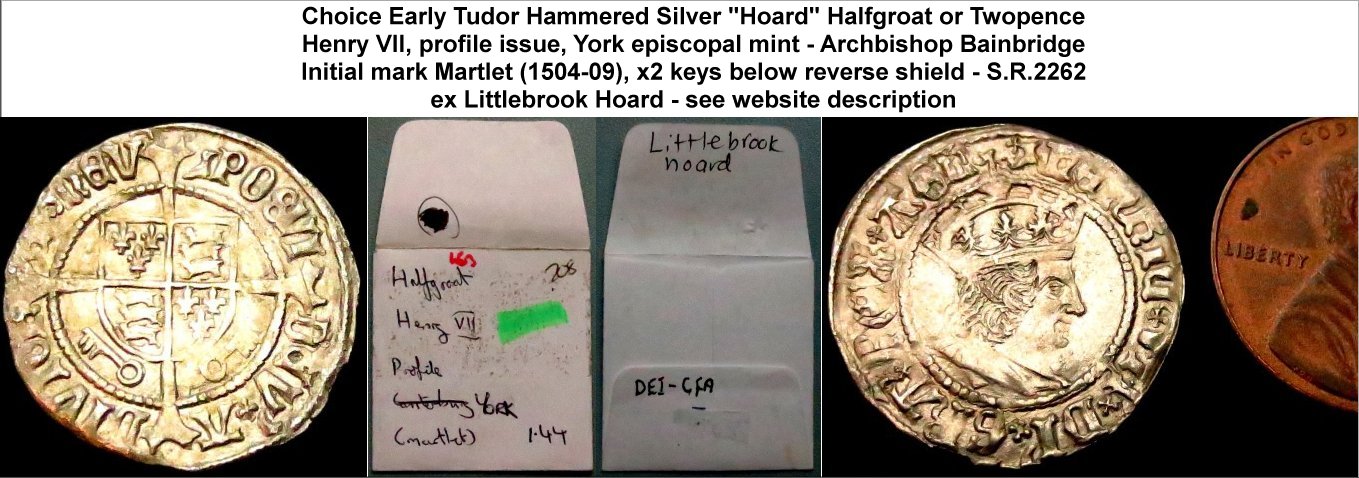
WTH-9337: Choice
Henry VII Hammered Silver Profile Issue Hoard Halfgroat. The later Profile issue, introduced during
the opening years of the 1500's - it is sometimes muted that this major
deviation from the previous several hundred years depiction of the monarch was
in response to the Scottish profile issue of James V but in reality, the
English were inspired by European profile currency and the Scottish duly copied
the English. Initial
mark Martlet (1502-04), York
Episcopal mint under Archbishop Bainbridge - two angled keys under the reverse
shield. S.R.2262. The Littlebrook
Hoard was discovered on 12 May 2004 during excavations for
the foundations of a new extension to Littlebrook
Farm in Belchalwell Street, Dorset. A mechanical
digger unearthed a pottery jug which was found to contain 213 silver coins: 176
groats and 37 half groats in varying condition, the bulk dating from the reign
of Henry VII (1485-1509). The find was reported and submitted to the British Museum and the coins were
examined and catalogued by Dr Barrie Cook, the Curator of Medieval Coins. An
inquest was held in Dorchester in March 2005 and the find was confirmed as
Treasure Trove and thus subject to the relevant legal rules. In accordance with the rules relating to
Treasure the hoard was offered to local museums and the jug and thirteen of the
coins were removed and are now the property of the Dorset County Museum. After discussion and
settlement with the finders, the current owners decided to retain the remaining
200 coins but have subsequently decided to sell them on the open market with
full provenance. The coins are thought
to have been deposited probably c. 1514-1520. Littlebrook Farm
lies in an isolated area of the Blackmore Vale, a
mile from the nearest hamlet and about 14 miles from Dorchester. The area is known to
be on the regular smuggling routes from the coastal areas of Portland to centres such as Salisbury and Bristol, which is probably the
explanation for the hoard’s deposit, especially considering the denominations
were unusually small. Lovely grade, the
rarer profile issue and a link to the infamous South Coast smuggling
fraternity! £485 RESERVED (M.He.26-5-26
Lay-Away)
Provenance:
ex Littlebrook Coin Hoard, 2004
Sovereign
Pennies
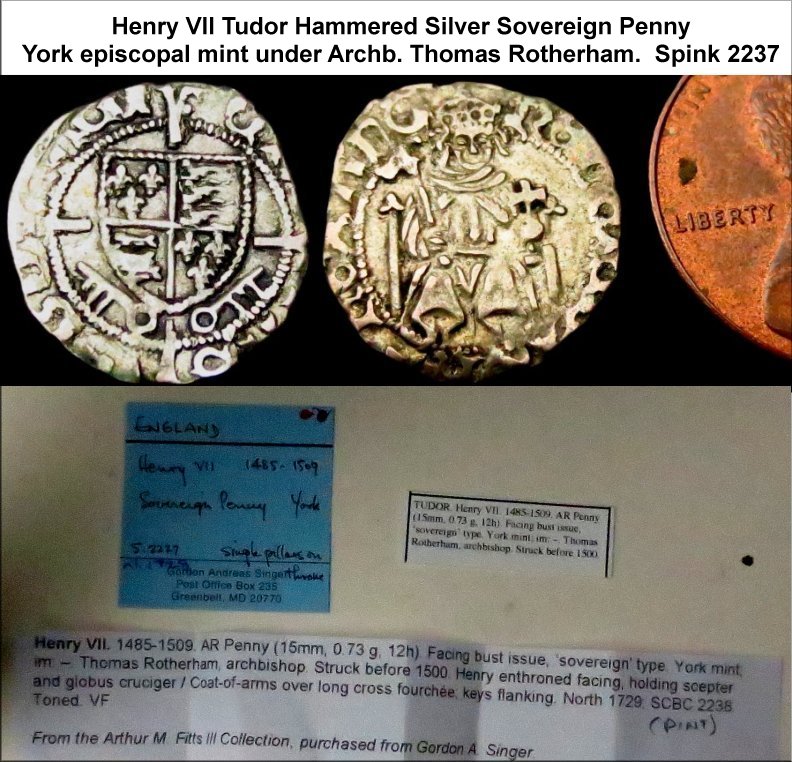
WTH-7889:
Henry VII
Hammered Silver Sovereign Penny. An
Episcopal issue struck at the York mint under Archbishop Thomas
Rotherham prior to 1500, according to the accompanying ticket. S.R. 2237. Slightly short of flan but
remarkable in the grade department.
Ex Gordon Singer (his ticket - sold for $135 in the early 2000's), ex
Arthur Fitts collection. £225