Henry II, Richard I, John & Henry III
Henry II (AD 1154-89) Read
about Henry II.
"Tealby"
WMH-9340: Henry
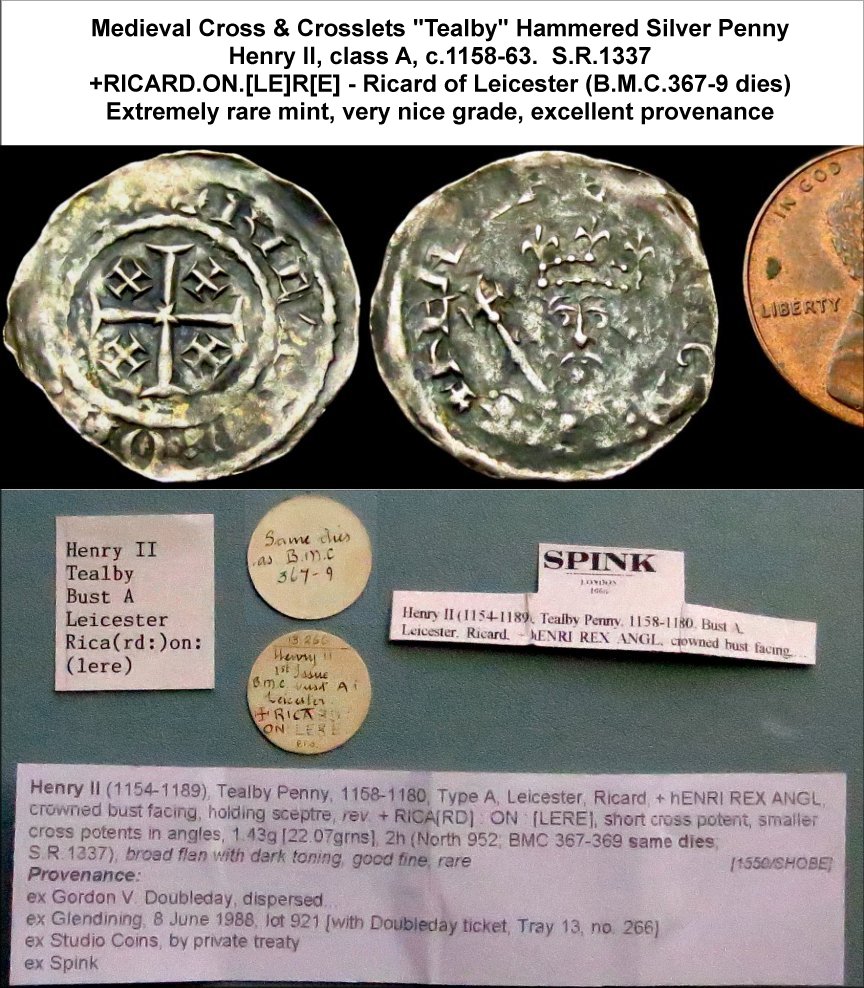
II *Rare Mint* Medieval Hammered Silver Tealby Penny. Cross & crosslets
coinage, class A1, c.1158-63.
B.M.C.367.
S.R.1337. +RICARD ON [LE]R[E] - Leicester mint with Ricard as
the moneyer. There are only five
Leicester Tealby coins recorded on the excellent EMC
(Fitzwilliam) database, of which three are Rodbert
and only two are Ricard. A proportion of that miniscule cohort will be
locked into institutional collections.
Of the latter Ricard pairing, there are no
images for both, perhaps indicating historically listed coins that are not 100%
verified. A generous full flan with well
centred, excellent obverse and reverse strikes; more indicative of the quality
of the Northern mints (Newcastle and Carlisle) than on this
exceptionally rare Midlands' mint coin.
As if that wasn't enough, the coin also comes with the desirable
Doubleday provenance (see link below).
It's not just find better, it's literally find
another! £1,375 RESERVED (M.He.2-6-26
Lay-Away)
Provenance:
ex Gordon Doubleday collection, his ticket, dispersed...
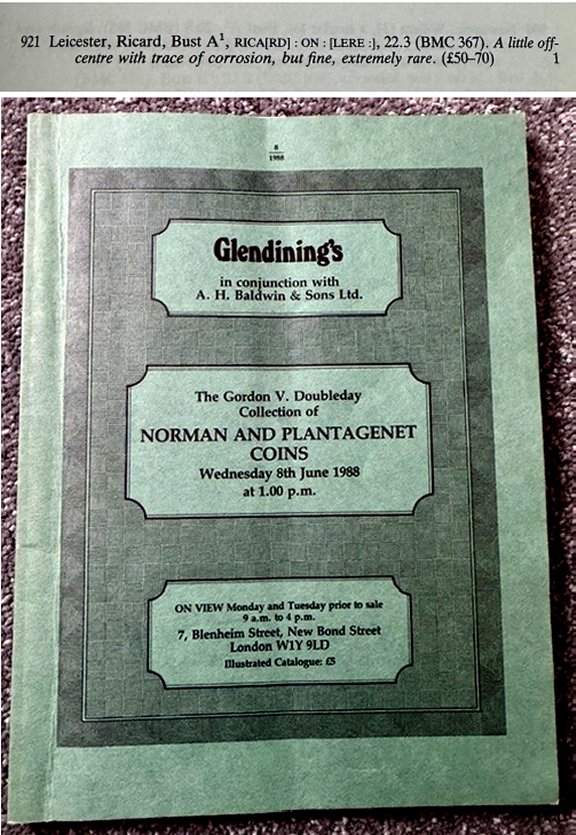
ex Glendining's, 8th June 1988, lot 921
ex Studio Coins (Michael Trenerry)
ex Spink
WMH-9321: Henry
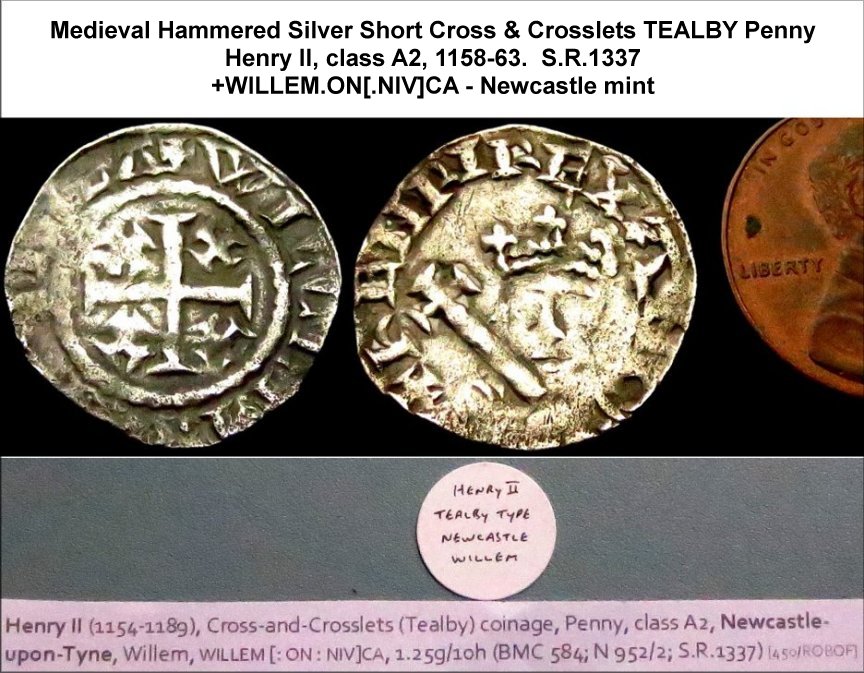
II TEALBY Medieval Hammered Silver Penny.
Cross and crosslets coinage of 1158-80.
+WILLEM.ON[.NIV]CA - Newcastle mint signature. Class A2, 1158-63, S.R.1366. SCBI will have you believe that Newcastle, along with Ipswich and Canterbury, is the very commonest of all the
30 mint towns in use during the Tealby coinage. Mmmm. Canterbury is (and Lincoln's up there as well) but not Newcastle and Ipswich - in fact this is the first Newcastle mint Tealby
penny that I've handled in getting on for a decade. An impressive full flan,
well centred early class A example of a Tealby penny
in excellent grade for issue. £445
WMH-9282: Henry
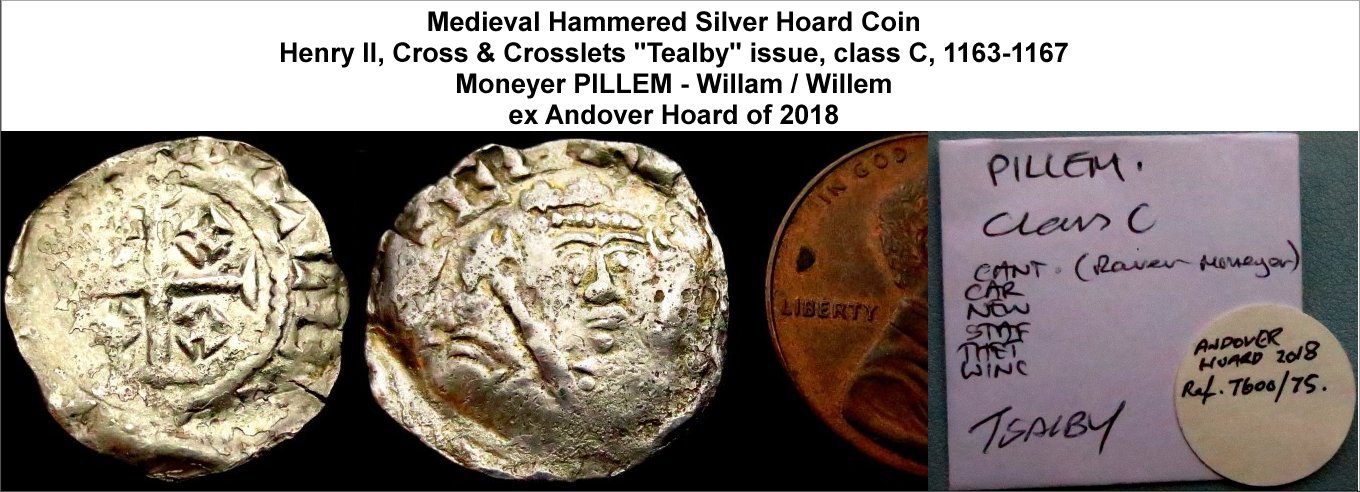
II "Tealby" Hammered Silver Penny. Cross and
Crosslets issue, class C, circa 1163-67. [+]PILLEM.OM[.N.--O--].
The O in the mint signature is tentative, especially considering it
doesn't really fit with any of the possible mint towns (see ticket
annotation). S.R.
1339. Immediately
following on from Stephen. Henry
of Anjou became Henry II upon the death of Stephen - a monarch who had an
extremely tenuous claim to the throne and who only stayed as king because he
agreed to let Henry, Matilda's son, ascend upon his death - and even though an
impressive 29 mints were opened to produce coinage, the quality was just as
poor, maybe even worse, as the Stephen coinage.
Of those 29 mints, only around a third continued after Henry's recoinage
to the voided short cross and come the later long cross issues, far fewer than
that. A recorded Hoard coin so good
provenance. A very
nice portrait. Cheap. £295
Provenance:
ex Andover
Hoard of 2018 (Ref T600/75)
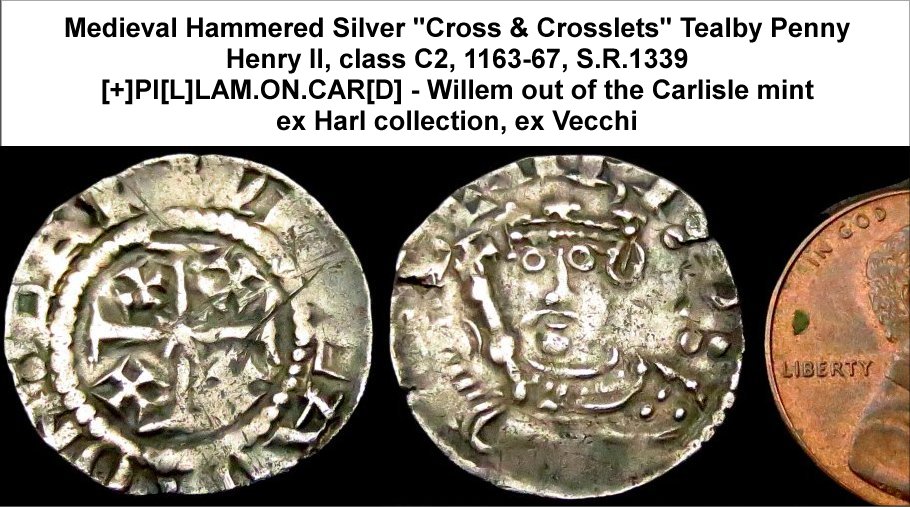
WMH-9151:
Choice Henry II
Tealby Medieval Hammered Silver Penny. Cross and Crosslets issue, class
C2, circa 1163-67. Carlisle mint - [+]PIL[L]AM.ON.CAR[D]. S.R. 1539. Immediately following on
from Stephen. Henry of Anjou
became Henry II upon the death of Stephen - a monarch who had an extremely
tenuous claim to the throne and who only stayed as king because he agreed to
let Henry, Matilda's son, ascend upon his death - and even though an impressive
29 mints were opened to produce coinage, the quality was just as poor, maybe
even worse, as the Stephen coinage. Of
those 29 mints, only around a third continued after Henry's recoinage to the
voided short cross and come the later long cross issues, far fewer than
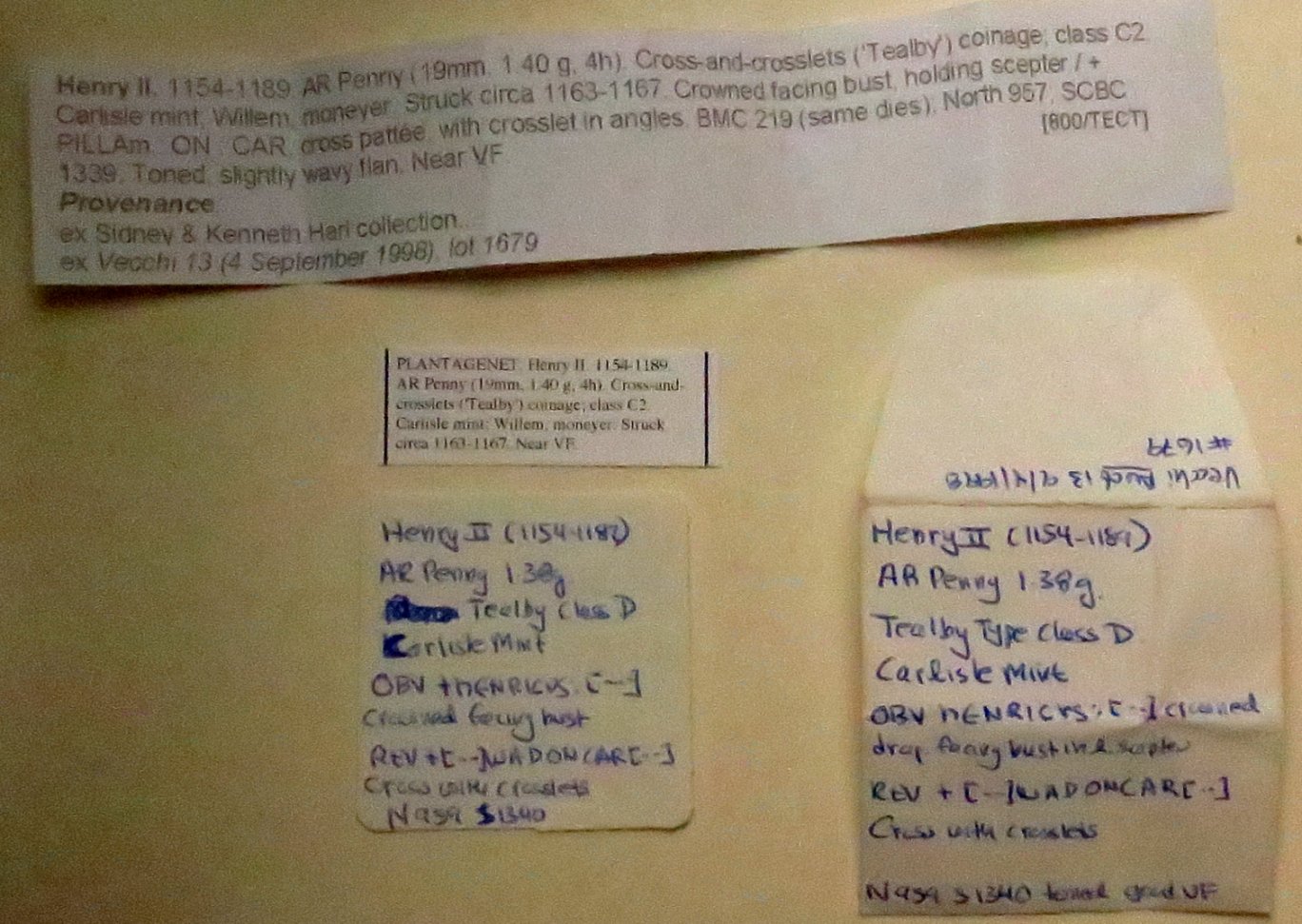
that. Good provenance - see old tickets here. Outstanding portrait - in fact probably the
best I've ever had - and the rarer mint town.
Old tickets here. The recent CNG Lincoln class A penny (only marginally better than this Carlisle example) achieved a hammer price
of $1,200 which as a general rule of thumb, after commissions, comes out at
about £1,200. You'll really struggle to
find better, especially now that the Lincoln example has found a new home! £885
Provenance:
ex Hari collection
ex Vecchi
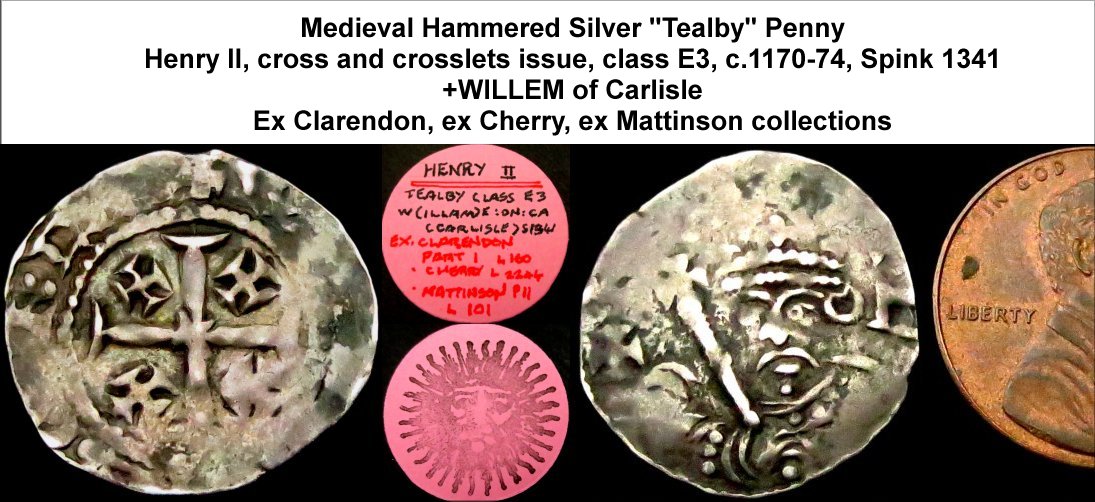
WMH-9079:
Henry II Tealby Medieval Hammered Silver Penny. Cross & crosslets
issue, class E3, circa 1170-4. Carlisle mint - +W[ILLE]M.ON.CA[R]. S.R. 1541. Outstanding portrait and
rarer mint town. £645
Provenance:
ex
Clarendon collection
ex
Cherry collection
ex Mattinson collection
ex Tim
Owen
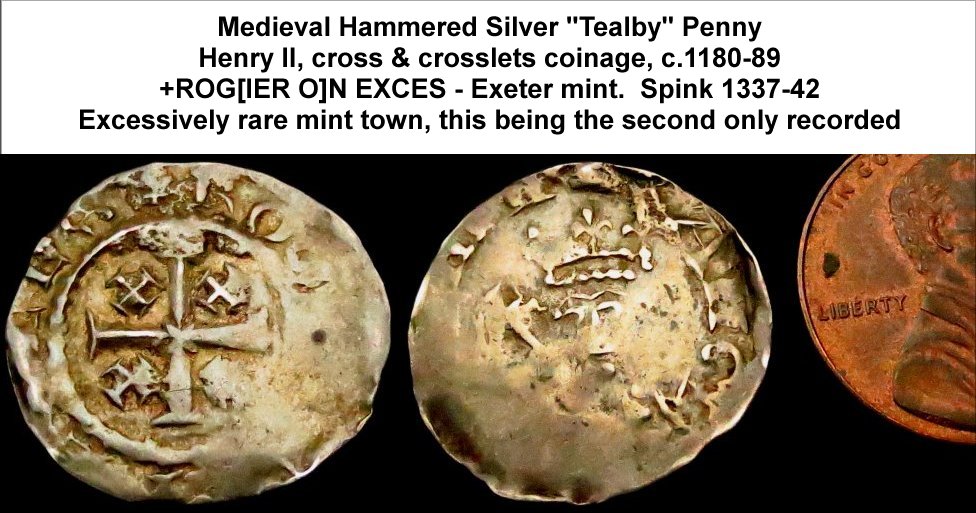
WMH-9070:
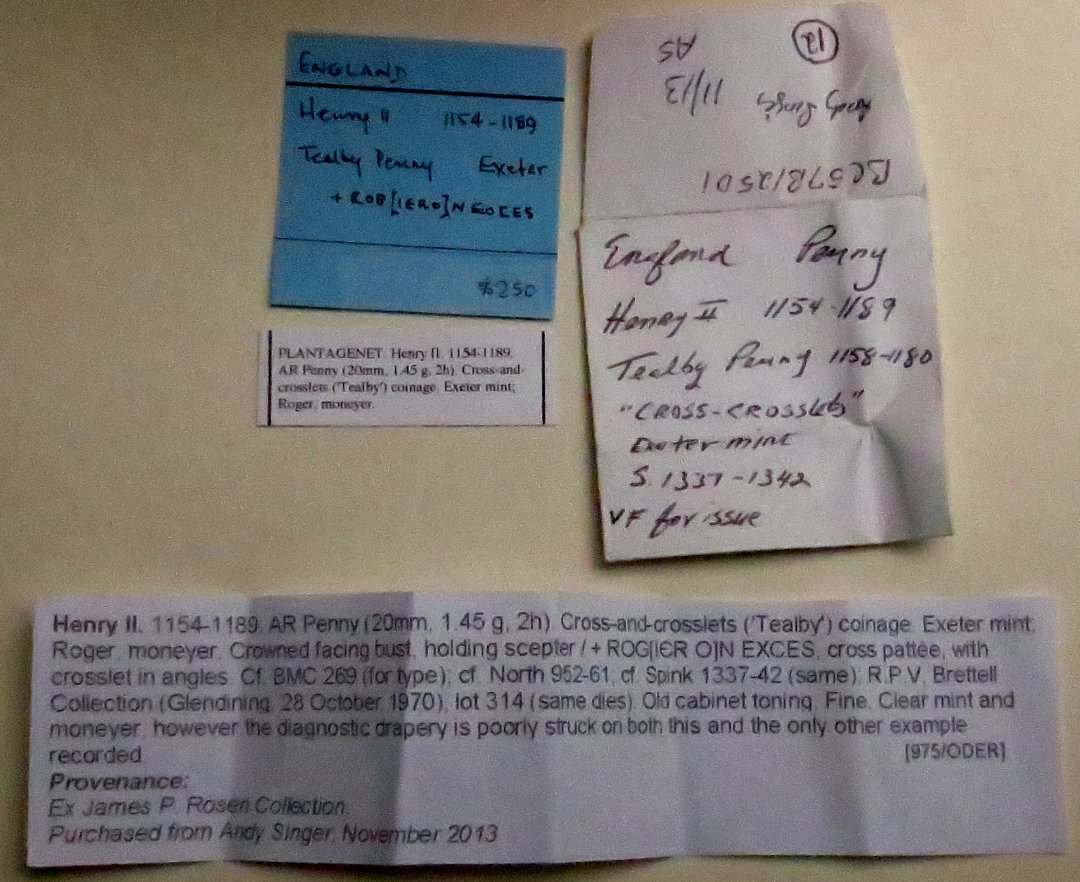
Rare Mint Henry
II Cross & Crosslets TEALBY Medieval Hammered Silver Penny. Circa 1154-1189. Exeter mint - +ROG[IER
O]N EXCES.
S.R. 1337-42 because the diagnostic features which normally give us the
class are not struck up. North has
ROGIER / Exeter as either class A or D.
The excellent EMC database has only two examples recorded - they really
are that rare. One is awful whilst the
other is truly astonishing. It is a
class A so I'm a little uncertain where North get
class D from. Lettering, whilst not as
reliable as the portraits, is another tool - the square E on this coin is very
much class A so circa 1158-63 and S.R. 1337.
Old tickets
here which state only one other example recorded - clearly there's been
another since that ticket was written.
Struck on a remarkably round flan for issue, especially considering the
south coast provenance - it is normally only the northern mints of Carlisle and Newcastle that struck on good, round
flans. Good provenance and excessively
rare. £995 RESERVED (J.K.20-1-25
Lay-Away)
Provenance:
ex
Andy Singer, sold 2013 to...
ex
James P. Rosen collection
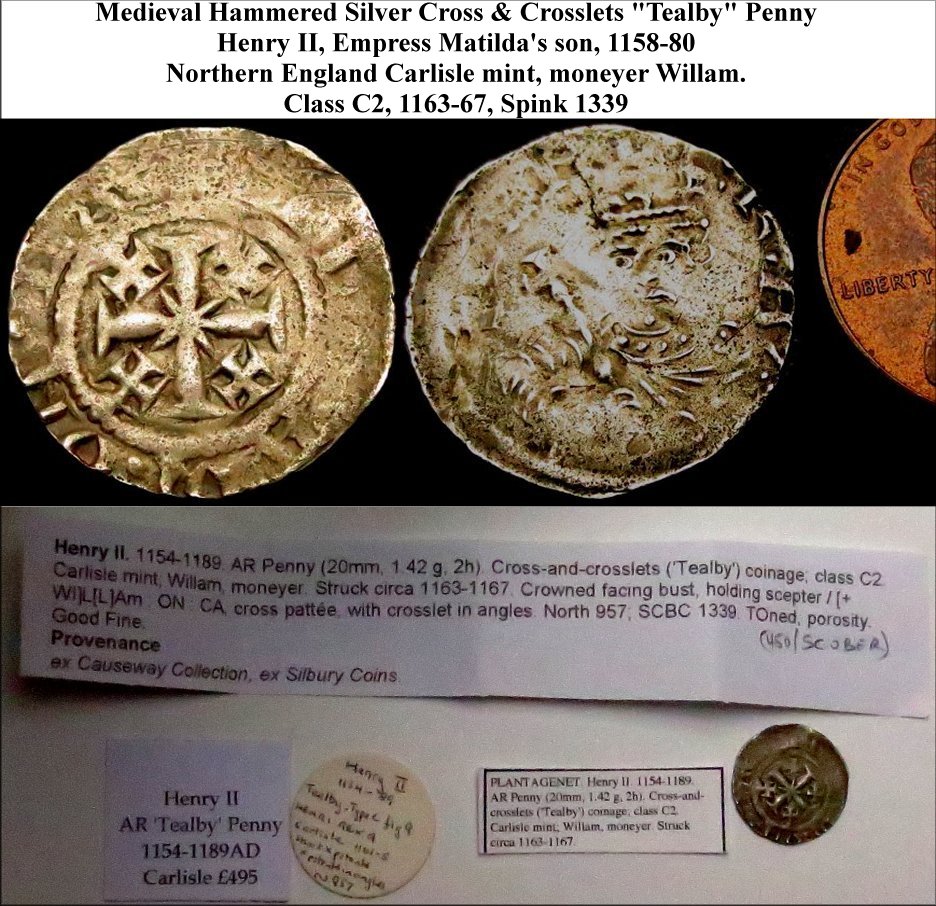
WMH-7636:
Henry II
Medieval Hammered Silver TEALBY Penny.
Cross and crosslets coinage, class C2. [+WI]L[L]Am:ON.CA – Carlisle mint. S.R. 1339. Ex Causeway collection, ex Silbury Coins, ex unknown UK collection (round ticket, reverse:
bought October 1987 for £65). A really nice example of this invariably awful issue. £495
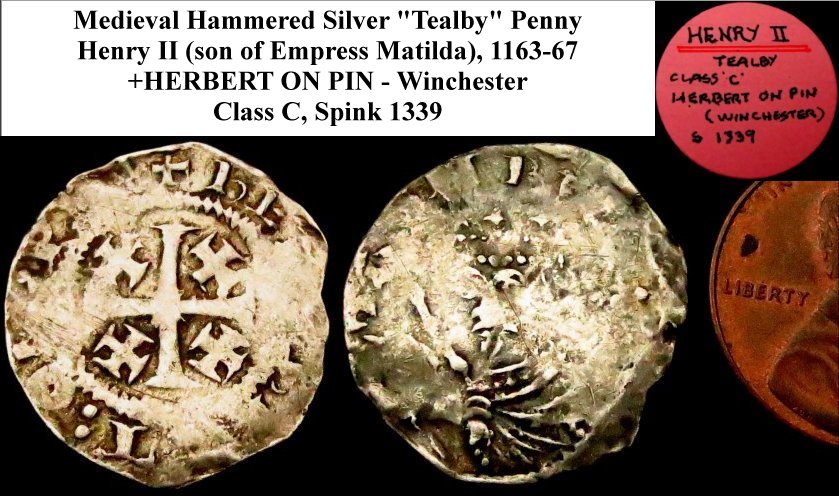
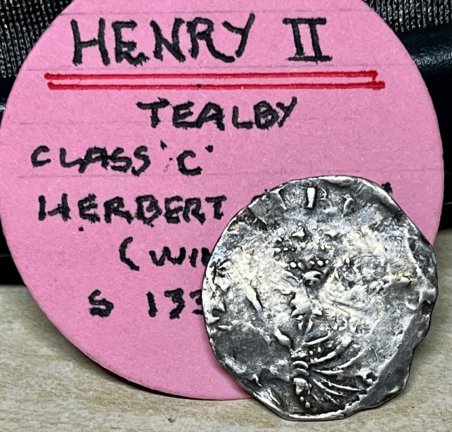
WMH-7641:
Henry II
Medieval Hammered Silver “Tealby” Penny. Cross and crosslets coinage, class C. +He[RBER]T:O[N].P[I]
– Winchester mint. S.R. 1339. Extra
image here as the harsh lighting was not
beneficial in the initial image. A nicer looking coin in the hand. £325
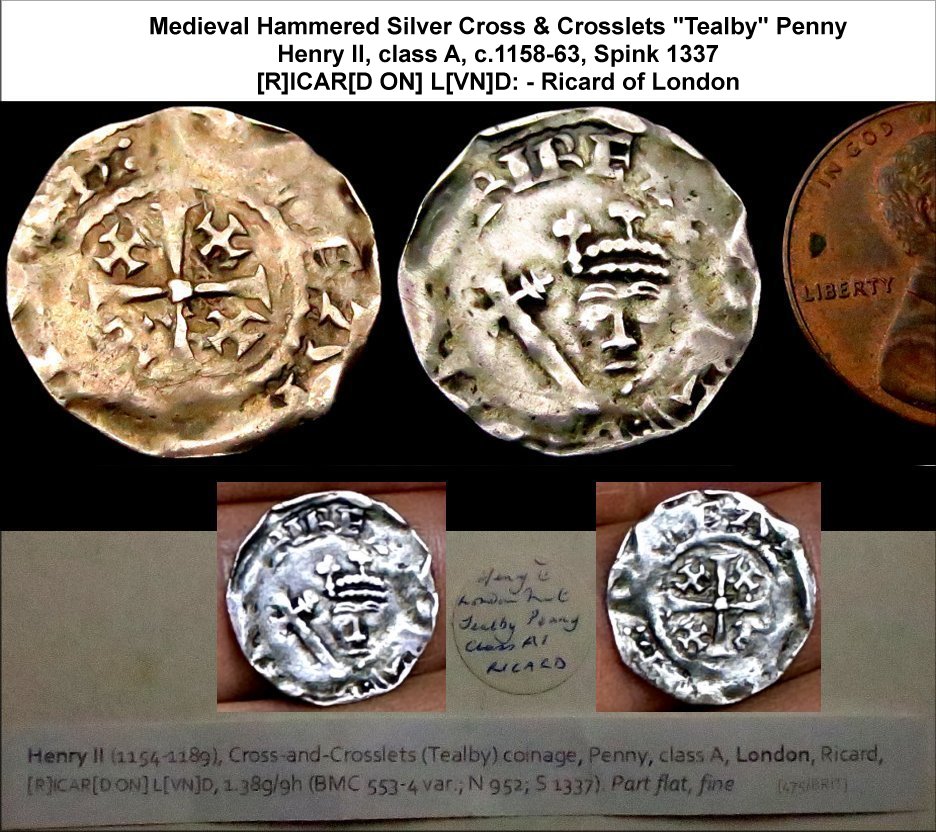
WMH-8066: Henry II Tealby Medieval Hammered Silver Penny. Class
A, circa 1158-63, no hair & no collar, S.R. 1337. Ricard at the London mint.
BMC 553-4 var.
Unusually round flan for such a southern mint coin, flat on the legends
but a lovely portrait (for issue!) and reverse cross and crosslets. £475
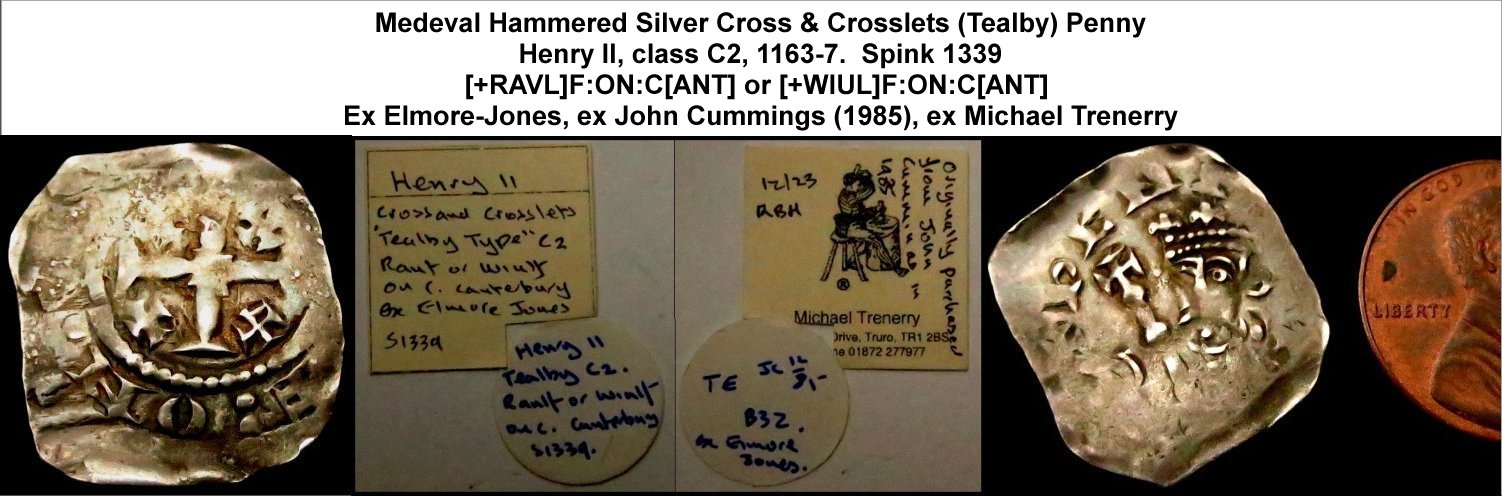
WMH-8135:
Henry II Cross
& Crosslets TEALBY Medieval Hammered Silver Penny. Class C2, 1163-67. Canterbury mint - either [+RAVL]F:ON:C[ANT] or [+WIUL]F:ON:C[ANT]. S.R. 1339. Struck on an irregular (square) flan, which Canterbury is well know
for on the Tealby issues. Good provenance. £545
Provenance:
Ex Elmore
Jones collection (sold Spring 1971)
Ex John
Cummings (1985)
Ex Michael
Trenerry (2023)
Henry II (AD 1154-89) Read about Henry II.
"Voided
Short Cross” Issues
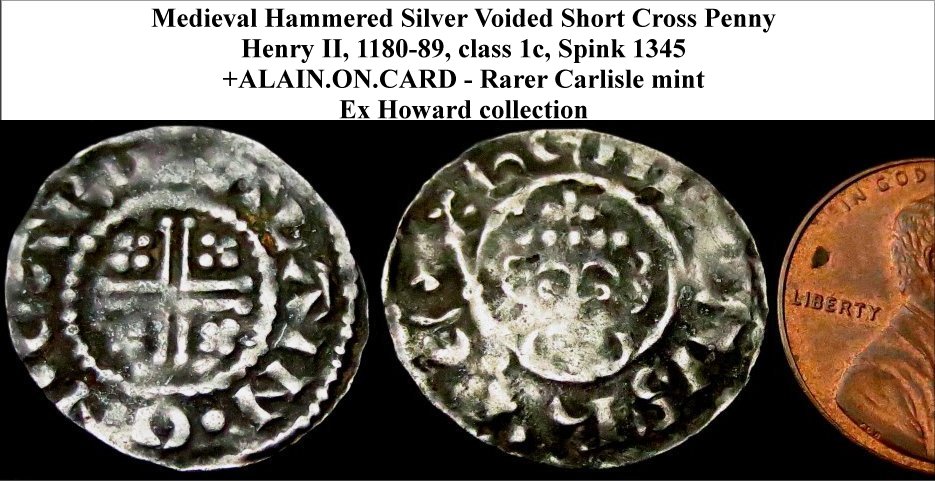
WMH-7310:
Henry II Voided Short
Cross Medieval Hammered Silver Penny.
Class 1c, 1180-89. +ALAIN.ON.CARD
– Carlisle mint. S.R. 1345. Ex Howard collection. £355
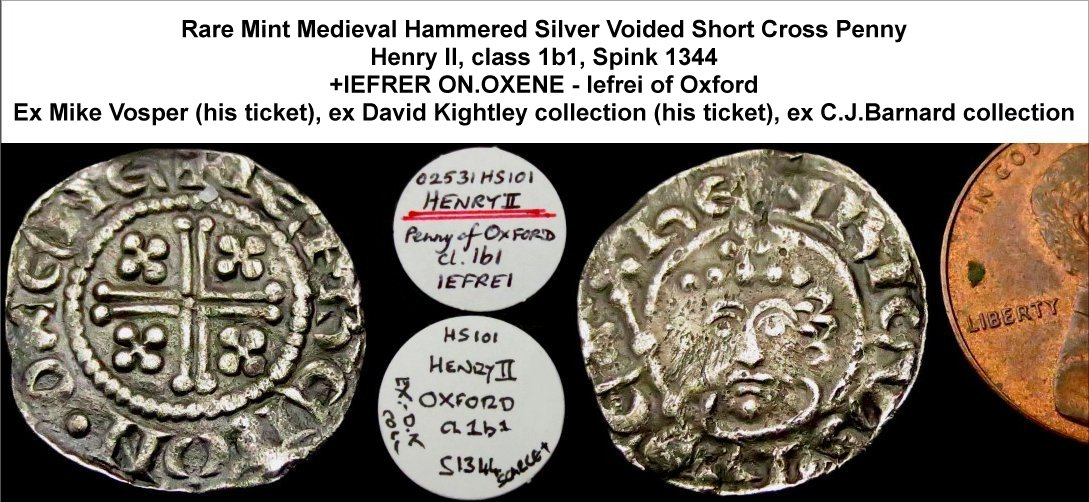
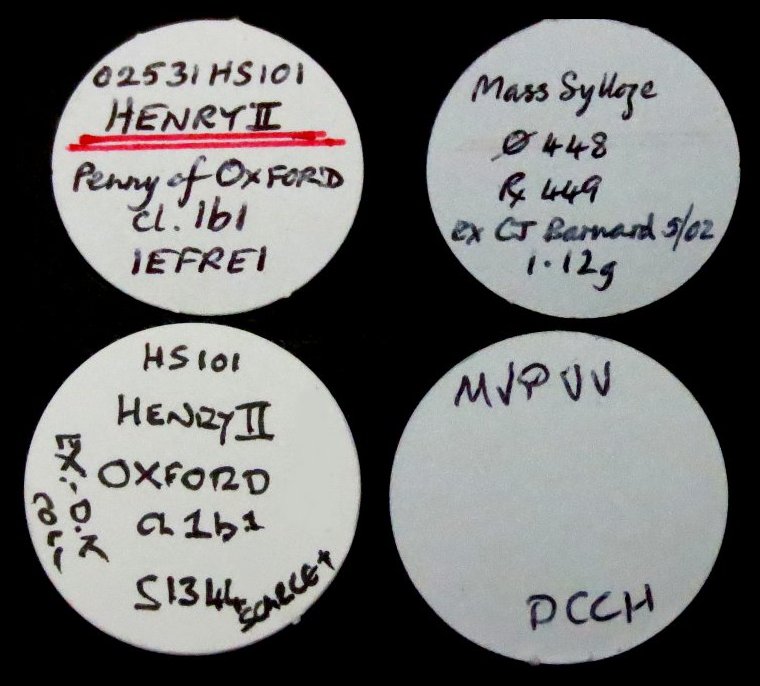
WMH-8072: Henry II Medieval Voided Short Cross Hammered Silver Penny. Class 1b1, 1180-89, S.R. 1344. Obverse: +hENRICVS.REX;
reverse: +IEFRER ON.OXENE. The rarer Oxford mint.
The excellent EMC / SCBI database lists but a single Henry II voided short
cross penny from Oxford, that being an entirely different
moneyer - Sægar, making this mint and moneyer
unrecorded on that database. See old tickets here. A rare coin. £385
Provenance:
Ex C.J. Barnard collection
(May 2002)
Ex David Kightley collection
Ex Mike Vosper
Henry II (AD 1154-89) Read about Henry II.
Other
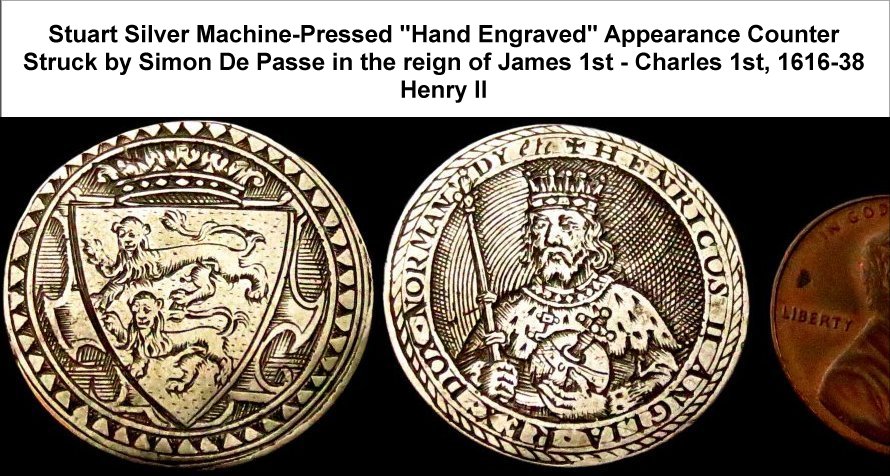
WJC-9338: (6) Henry II : 1616-38
Silver Simon de Passe Token. Machine-pressed silver tokens or counters
depicting the monarchs of England, issued in sets (thought to be thirty six),
composed either of pieces of different monarchs or repetitions of the same type. Thought to be primarily
used as markers or counters "for reckoning and for play". The dies were very cleverly sunk to give the
impression of a hand-engraved silver token.
Some of these counters were executed early in the 1616-38 period by
Nicholas Hilliard, jeweller; goldsmith and engraver to Elizabeth 1st and
afterwards to James 1st. In 1617,
Hilliard received a patent granting him the monopoly for twelve years of all
the engraved portraits of the King and the Royal Family. He subsequently sold licences to other
engravers to execute these counters, one of which was to Simon de Passe and his brother, both of whom excelled in the art of
engraving. This sub-licence to the de Passe brothers was issued late in the reign of James
1st. Collectively, these tokens are all
termed De Passe tokens for convenience. £235
Provenance:
From a collection put together over a
great many years; dispersed by Spink.
Richard I (AD 1189 - 1199) Read
about Richard I
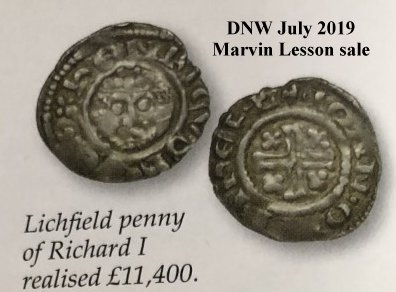
(I’m sometimes asked if I
ever get any Lichfield short cross pennies in stock for sale by the mint
collectors. Most do not appreciate the
great rarity of this mint and nearly all would be surprised and shocked to
learn that £11,400 is now the going rate – for the only example
available outside of institutions, although even that coin is now locked away
in a collection! See here for details.)
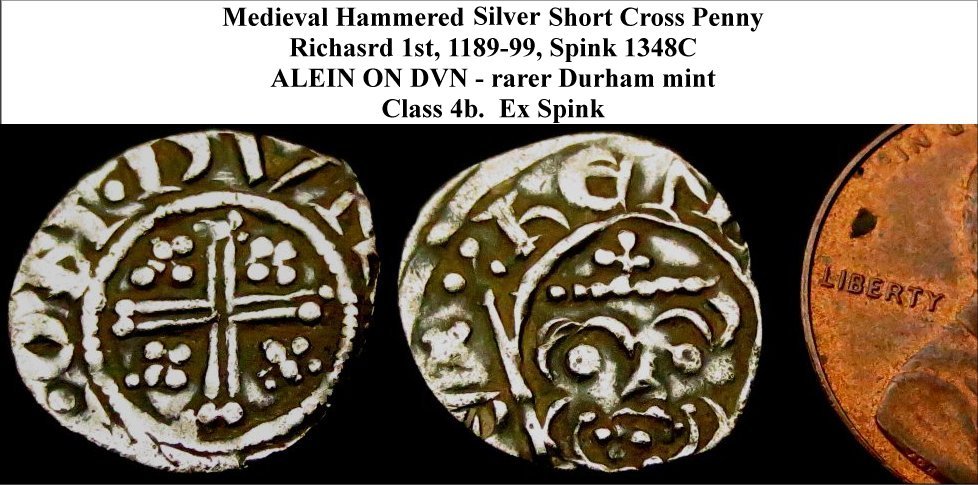
WMH-7543:
Richard 1st
Hammered Silver Short Cross Penny – Rare Mint. Class 4b, ALEIN.ON DVR – Durham mint.
S.R. 1348C.
High grade coin although clearly this one didn’t escape the clipper’s
eye back in the day! Richard 1st
Durham pennies are very thin on the ground though. £185
King John (1199-1216) Read
about King John
WMH-9071:
King John
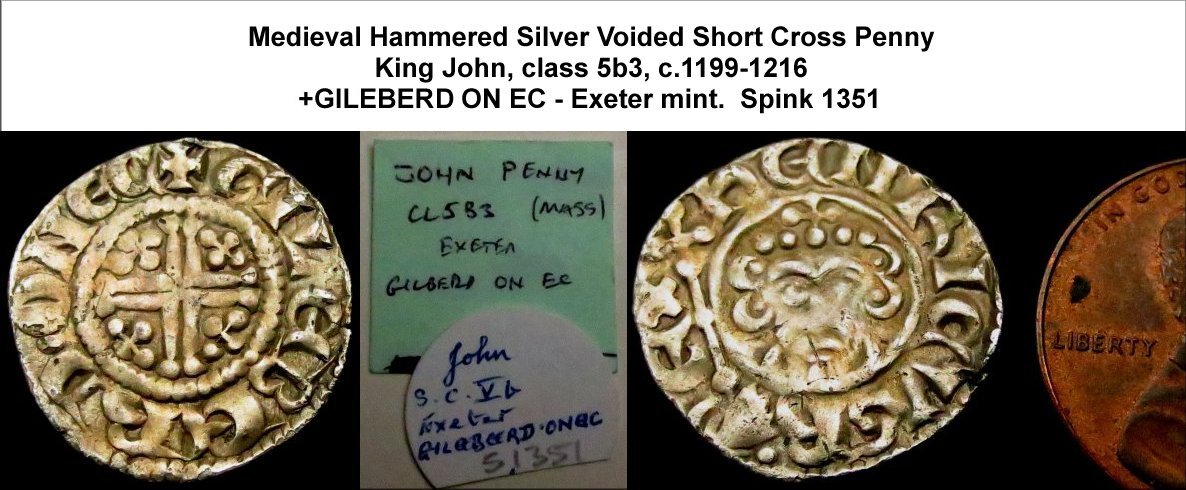
Medieval Hammered Silver Penny. +GILEBERD
ON EC – Exeter mint. Voided short cross. Class 5b3, 1199 – 1216. S.R. 1351. A superb example from this
rare mint town. £345 RESERVED (J.K.20-1-25
Lay-Away)
WMH-7544:
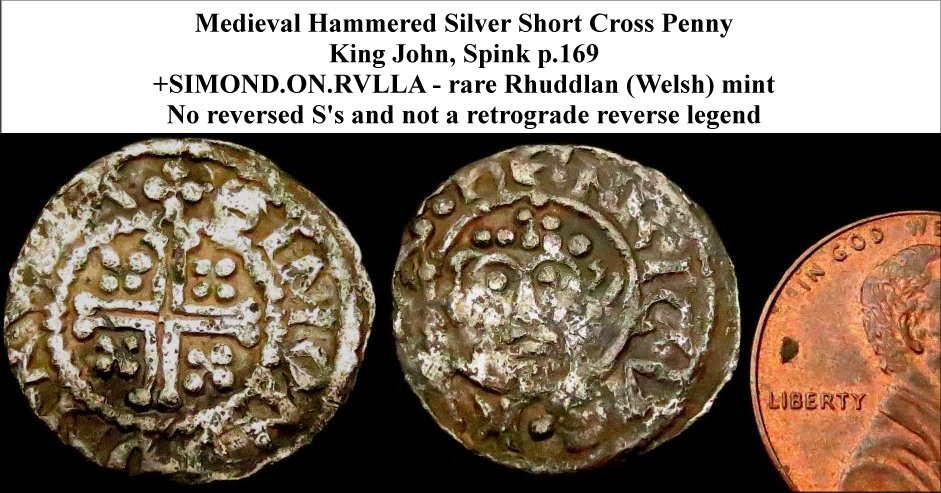
King John
Hammered Silver Short Cross Penny – Very Rare Mint. Class 4b, SIMON.ON RVLLA – Rhuddlam
mint. S.R.
p.169. Initial mark Cross Pommee, group II, similar to the English Class 5, class
iii. Strong portrait, toned, described
in the accompanying information slip as Very Fine, which is might well be,
just, for issue. £465
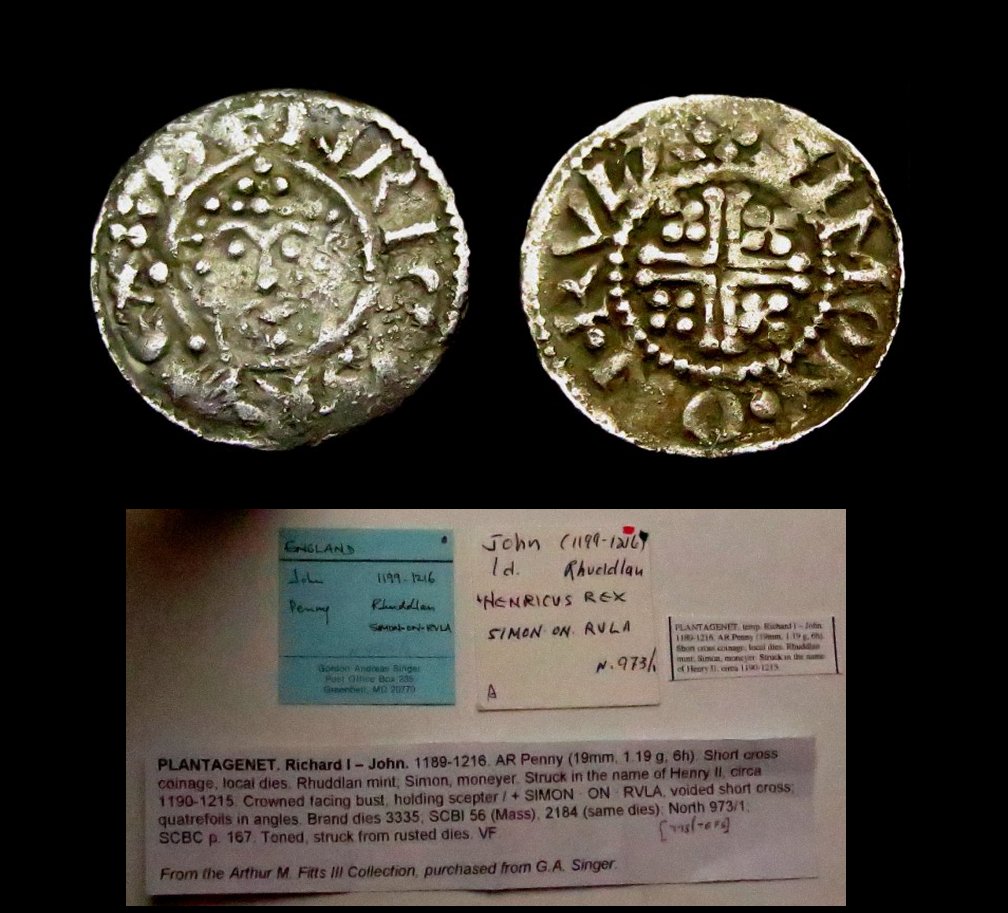
WMH-7621:
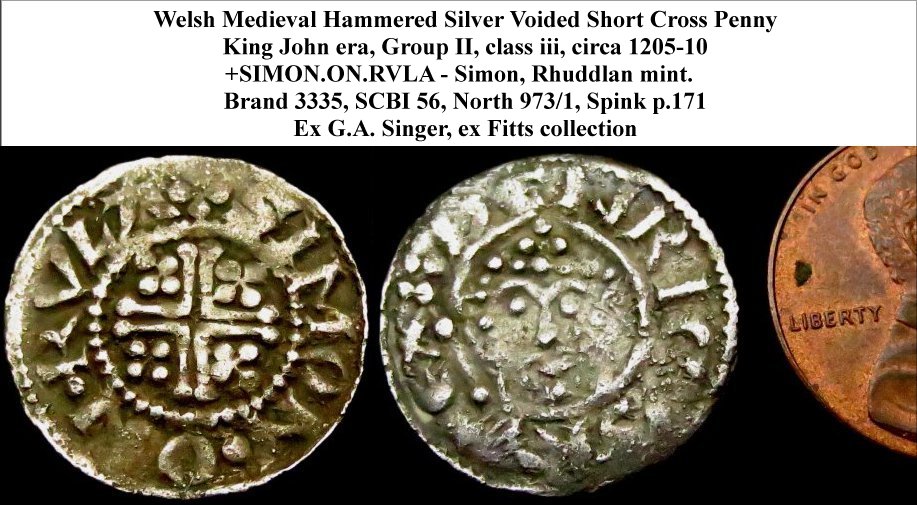
Welsh Mint Rhuddlan King John Medieval Hammered Silver Voided Short
Cross Penny – Rare and Choice. Group
II, class iii, Rhuddlan (Welsh) mint, circa 1205-10 so under King
John, even though the coin is, as are all voided short cross pennies, in the
name of Henry II - +hENRICVS REX. The reverse reads +SIMON.ON.RVLA. Locally produced dies of remarkably good quality,
and without the usual retrograde legends.
A high grade example of this rare and nearly always poor issue – see this recent example as a
comparison. Extra
image here showing tickets. Ex Arthur Fitts, ex Gary Singer. Choice. £1,095
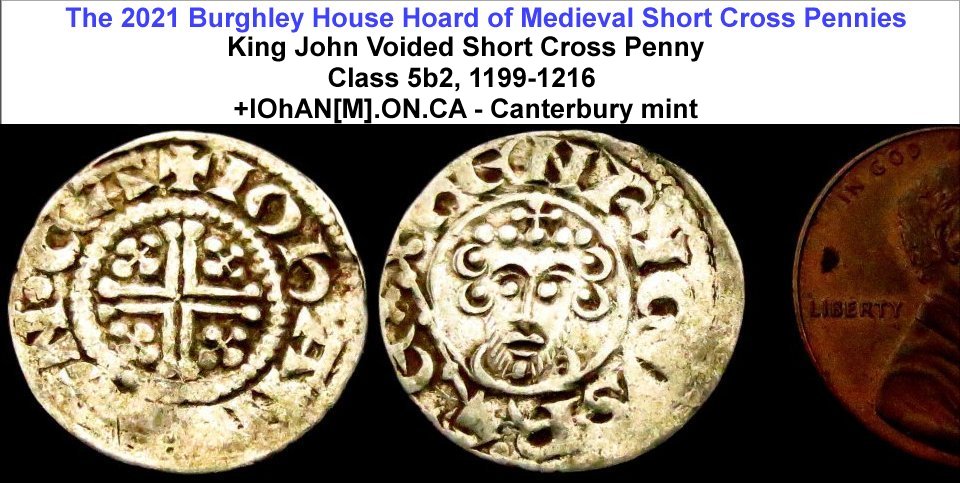
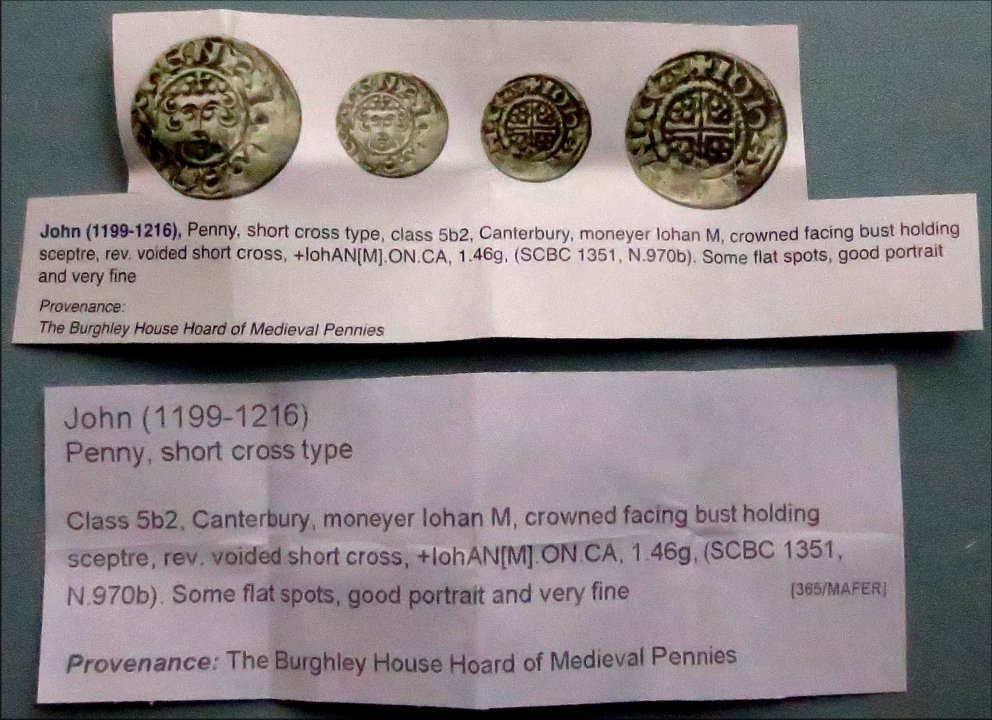
WMH-9344: ** THE BURGHLEY HOUSE HOARD** King John Medieval
Hammered Silver Voided Short Cross Penny. Class 5b2, +IOhAN[M].ON.CA - Canterbury mint. S.R.1351. In 2021, going into 2022, one of the largest hoards of early
Plantagenet coinage was discovered in the grounds of the famous Burghley House estate - a Grade 1 listed English Country
House (resembling a very large stately home) in Stamford, Lincolnshire. Lord Burghley - David
Cecil, later the 6th Marquess of Exeter - famously won
the gold medal in the 400-metre hurdles at the 1928 Summer Olympics, as
depicted in the film, Chariots of Fire, with extensive training throughout the
1,400 acres of his estate. He famously
got one of his grounds men to lay out his hurdles on the estate with an upright
matchbox on each one, the aim being to not only clear each hurdle, at
full speed, but to just clear each hurdle, at full speed, and further, to just clear each hurdle,
at full speed, at a specific point
on each hurdle with the leading leg with hopefully all matchboxes being
successfully dislodged and hurdles intact!
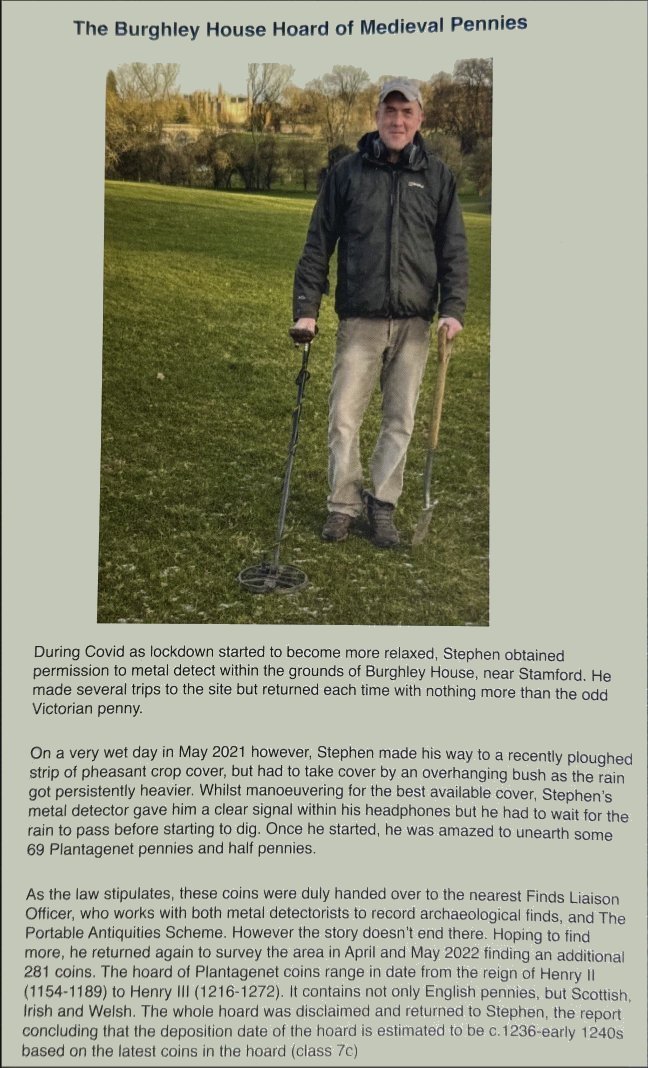
The
hoard consisted of approximately 350 Plantagenet pennies and halfpennies,
ranging from Henry II to Henry III. The
hoard deposition is estimated to the very early 1240's, based on the latest
coins in the hoard - class 7c pennies of Henry III. The find was handed over to the state via the
PAO scheme. After an inquest, the hoard
was eventually disclaimed and returned to the finder. See here for the story in
print. Of those 350 hoard coins, the
majority were Henry III, illustrating that John, whilst not a rare monarch
within the short cross period, is certainly not the commonest. Tickets
here. An
uncommon coin from within a secure hoard context. £275
Provenance:
ex Burghley House 2021/2 Hoard
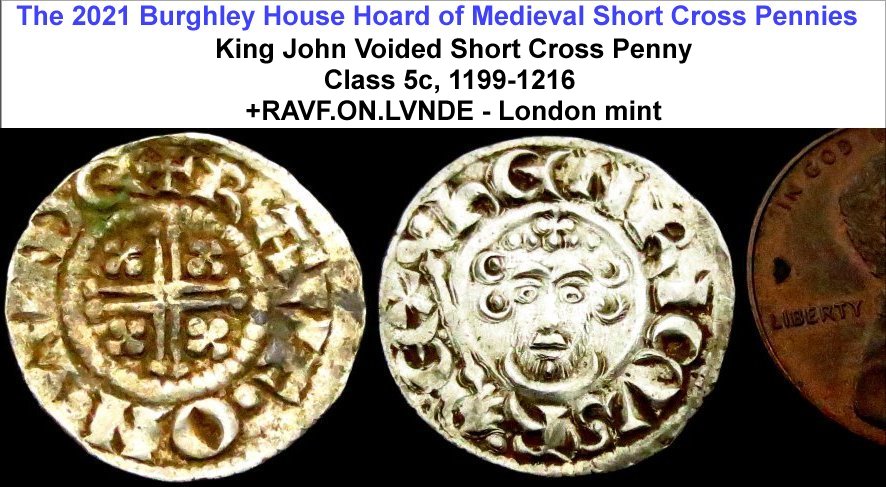
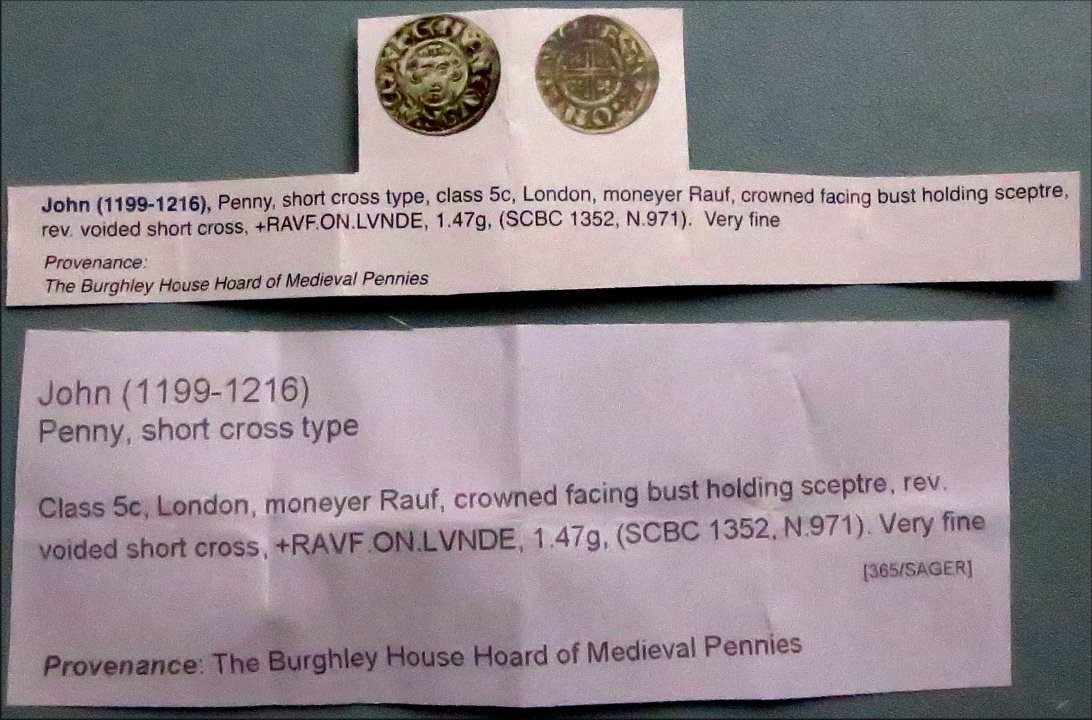
WMH-9345: ** THE BURGHLEY HOUSE HOARD** King John Medieval
Hammered Silver Voided Short Cross Penny. Class 5c,
+RAVF.ON.LVNDE - London mint.
S.R.1352. In
2021, going into 2022, one of the largest hoards of early Plantagenet coinage
was discovered in the grounds of the famous Burghley
House estate - a Grade 1 listed English Country House (resembling a very large
stately home) in Stamford, Lincolnshire. Lord Burghley - David
Cecil, later the 6th Marquess of Exeter - famously won
the gold medal in the 400-metre hurdles at the 1928 Summer Olympics, as
depicted in the film, Chariots of Fire, with extensive training throughout the
1,400 acres of his estate. He famously
got one of his grounds men to lay out his hurdles on the estate with an upright
matchbox on each one, the aim being to not only clear each hurdle, at
full speed, but to just clear each hurdle, at full speed, and further, to just clear each hurdle,
at full speed, at a specific point
on each hurdle with the leading leg with hopefully all matchboxes being
successfully dislodged and hurdles intact!
The
hoard consisted of approximately 350 Plantagenet pennies and halfpennies,
ranging from Henry II to Henry III. The
hoard deposition is estimated to the very early 1240's, based on the latest
coins in the hoard - class 7c pennies of Henry III. The find was handed over to the state via the
PAO scheme. After an inquest, the hoard
was eventually disclaimed and returned to the finder. See here for the story in
print. Of those 350 hoard coins, the
majority were Henry III, illustrating that John, whilst not a rare monarch
within the short cross period, is certainly not the commonest. Tickets
here. An
uncommon coin from within a secure hoard context. £275
Provenance:
ex Burghley House 2021/2 Hoard
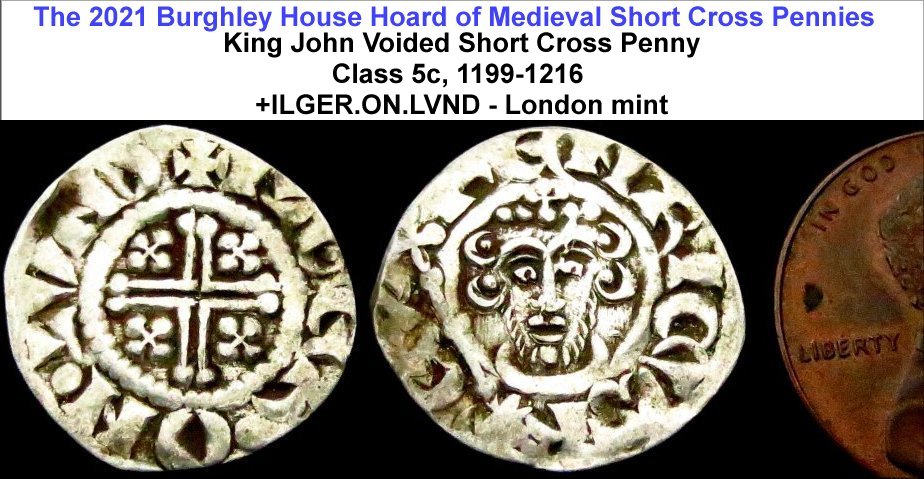
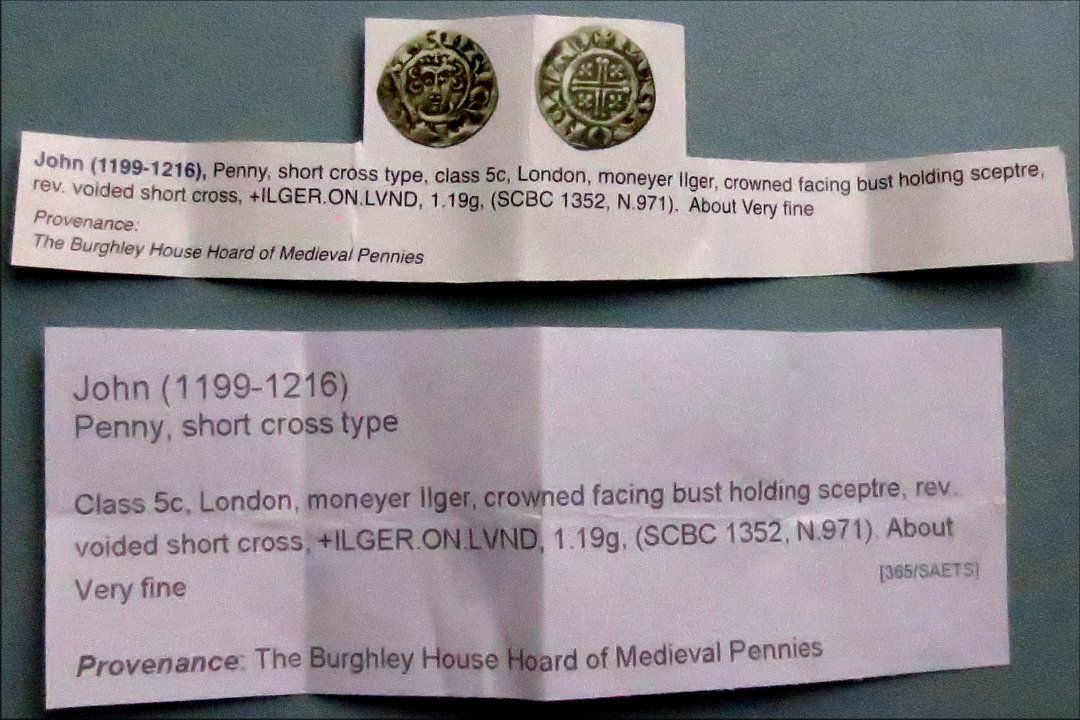
WMH-9346: ** THE BURGHLEY HOUSE HOARD** King John Medieval
Hammered Silver Voided Short Cross Penny. Class 5c,
+ILGER.ON.LVND - London mint.
S.R.1352. In
2021, going into 2022, one of the largest hoards of early Plantagenet coinage
was discovered in the grounds of the famous Burghley
House estate - a Grade 1 listed English Country House (resembling a very large
stately home) in Stamford, Lincolnshire. Lord Burghley - David
Cecil, later the 6th Marquess of Exeter - famously won
the gold medal in the 400-metre hurdles at the 1928 Summer Olympics, as
depicted in the film, Chariots of Fire, with extensive training throughout the
1,400 acres of his estate. He famously
got one of his grounds men to lay out his hurdles on the estate with an upright
matchbox on each one, the aim being to not only clear each hurdle, at
full speed, but to just clear each hurdle, at full speed, and further, to just clear each hurdle,
at full speed, at a specific point
on each hurdle with the leading leg with hopefully all matchboxes being
successfully dislodged and hurdles intact!
The
hoard consisted of approximately 350 Plantagenet pennies and halfpennies,
ranging from Henry II to Henry III. The
hoard deposition is estimated to the very early 1240's, based on the latest
coins in the hoard - class 7c pennies of Henry III. The find was handed over to the state via the
PAO scheme. After an inquest, the hoard
was eventually disclaimed and returned to the finder. See here for the story in
print. Of those 350 hoard coins, the
majority were Henry III, illustrating that John, whilst not a rare monarch
within the short cross period, is certainly not the commonest. Tickets
here. An
uncommon coin from within a secure hoard context. £275
Provenance:
ex Burghley House 2021/2 Hoard
Henry III (1216-72)
Voided Short Cross Provincial mints:
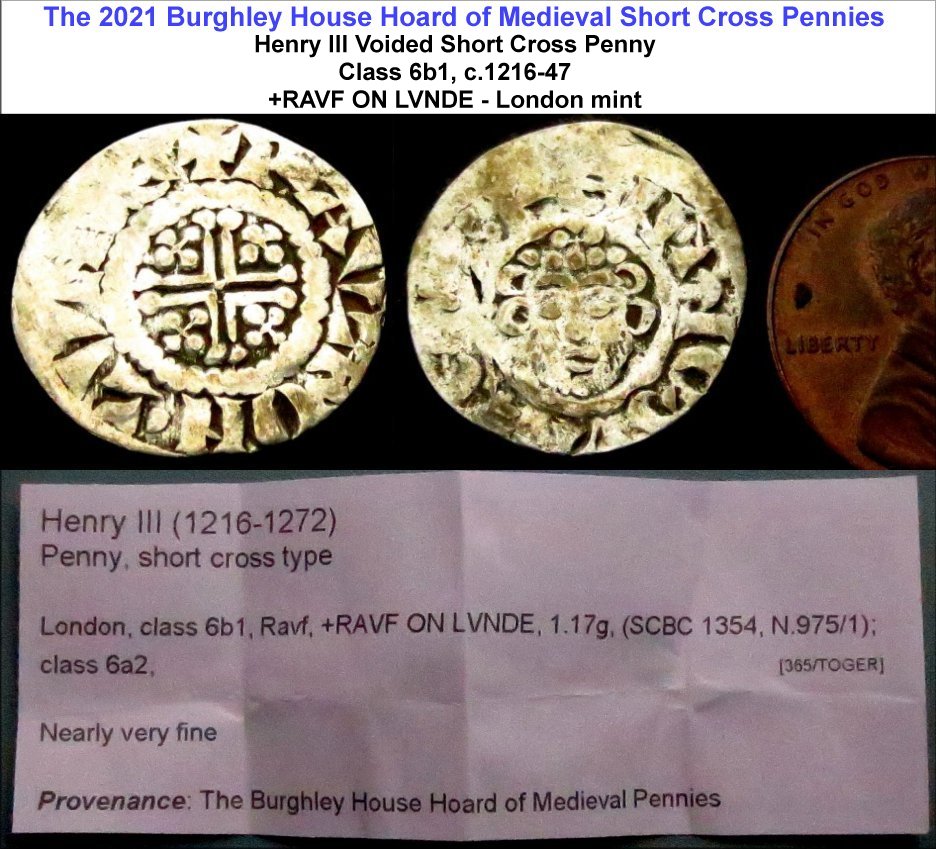
WMH-9348: ** THE BURGHLEY HOUSE HOARD** Henry III Medieval Hammered
Silver Voided Short Cross Penny. Class 6b1, +RAVF
ON LVNDE - London mint.
S.R.1354. In
2021, going into 2022, one of the largest hoards of early Plantagenet coinage was
discovered in the grounds of the famous Burghley
House estate - a Grade 1 listed English Country House (resembling a very large
stately home) in Stamford, Lincolnshire. Lord Burghley - David
Cecil, later the 6th Marquess of Exeter - famously won
the gold medal in the 400-metre hurdles at the 1928 Summer Olympics, as
depicted in the film, Chariots of Fire, with extensive training throughout the
1,400 acres of his estate. He famously
got one of his grounds men to lay out his hurdles on the estate with an upright
matchbox on each one, the aim being to not only clear each hurdle, at
full speed, but to just clear each hurdle, at full speed, and further, to just clear each hurdle,
at full speed, at a specific point
on each hurdle with the leading leg with hopefully all matchboxes being
successfully dislodged and hurdles intact!
The
hoard consisted of approximately 350 Plantagenet pennies and halfpennies,
ranging from Henry II to Henry III. The
hoard deposition is estimated to the very early 1240's, based on the latest
coins in the hoard - class 7c pennies of Henry III. The find was handed over to the state via the
PAO scheme. After an inquest, the hoard
was eventually disclaimed and returned to the finder. See here for the story in
print. An
opportunity to acquire a coin from within a secure hoard context. £145
Provenance:
ex Burghley House 2021/2 Hoard
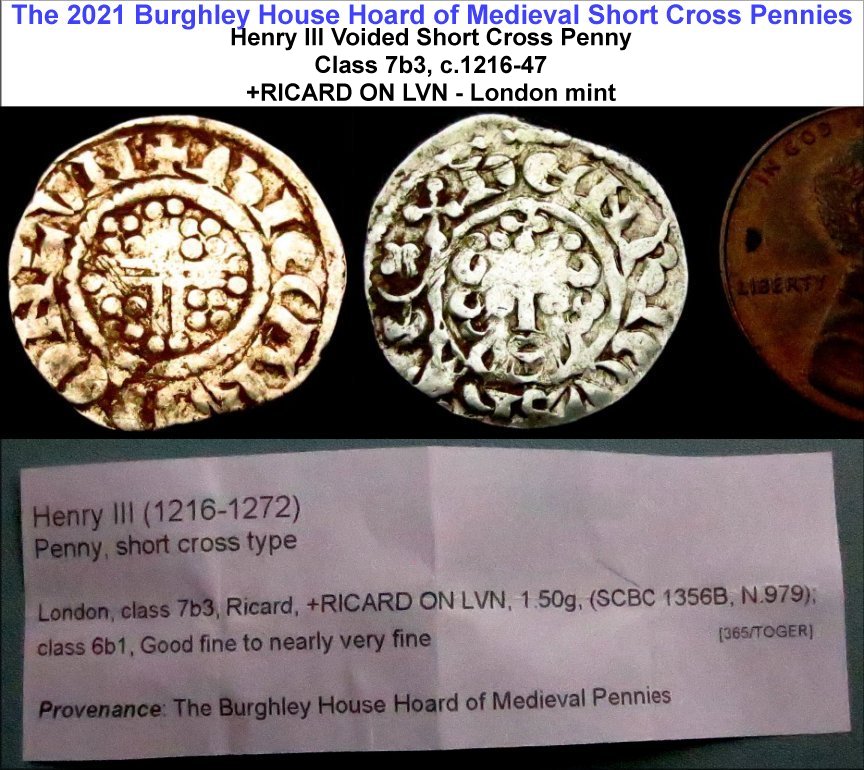
WMH-9349: ** THE BURGHLEY HOUSE HOARD** Henry III Medieval Hammered
Silver Voided Short Cross Penny. Class 7b3,
+RICARD ON LVN - London mint.
S.R.1356B. In
2021, going into 2022, one of the largest hoards of early Plantagenet coinage
was discovered in the grounds of the famous Burghley
House estate - a Grade 1 listed English Country House (resembling a very large
stately home) in Stamford, Lincolnshire. Lord Burghley - David
Cecil, later the 6th Marquess of Exeter - famously won
the gold medal in the 400-metre hurdles at the 1928 Summer Olympics, as
depicted in the film, Chariots of Fire, with extensive training throughout the
1,400 acres of his estate. He famously
got one of his grounds men to lay out his hurdles on the estate with an upright
matchbox on each one, the aim being to not only clear each hurdle, at
full speed, but to just clear each hurdle, at full speed, and further, to just clear each hurdle,
at full speed, at a specific point
on each hurdle with the leading leg with hopefully all matchboxes being
successfully dislodged and hurdles intact!
The
hoard consisted of approximately 350 Plantagenet pennies and halfpennies,
ranging from Henry II to Henry III. The
hoard deposition is estimated to the very early 1240's, based on the latest
coins in the hoard - class 7c pennies of Henry III. The find was handed over to the state via the
PAO scheme. After an inquest, the hoard
was eventually disclaimed and returned to the finder. See here for the story in
print. An interesting coin, being
struck just prior to the when the hoard was deposited in the ground. As such, we must assume that this coin hadn't
had time to become worn, damaged etc through circulation, thus was close to
being as issued by the mint. An opportunity to acquire a coin from within a secure hoard
context. £145
Provenance:
ex Burghley House 2021/2 Hoard
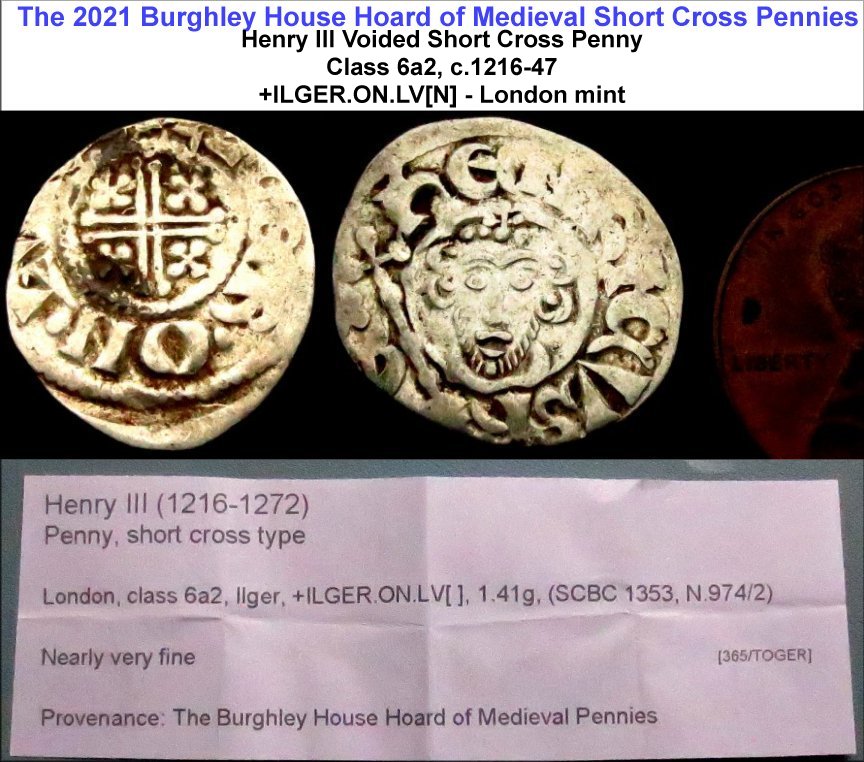
WMH-9350: ** THE BURGHLEY HOUSE HOARD** Henry III Medieval Hammered
Silver Voided Short Cross Penny. Class 6a2, +ILGER ON LV[N] - London mint. S.R.1353. In 2021, going into 2022, one of the largest hoards of early
Plantagenet coinage was discovered in the grounds of the famous Burghley House estate - a Grade 1 listed English Country
House (resembling a very large stately home) in Stamford, Lincolnshire. Lord Burghley - David
Cecil, later the 6th Marquess of Exeter - famously won
the gold medal in the 400-metre hurdles at the 1928 Summer Olympics, as
depicted in the film, Chariots of Fire, with extensive training throughout the
1,400 acres of his estate. He famously
got one of his grounds men to lay out his hurdles on the estate with an upright
matchbox on each one, the aim being to not only clear each hurdle, at
full speed, but to just clear each hurdle, at full speed, and further, to just clear each hurdle,
at full speed, at a specific point
on each hurdle with the leading leg with hopefully all matchboxes being
successfully dislodged and hurdles intact!
The
hoard consisted of approximately 350 Plantagenet pennies and halfpennies,
ranging from Henry II to Henry III. The
hoard deposition is estimated to the very early 1240's, based on the latest
coins in the hoard - class 7c pennies of Henry III. The find was handed over to the state via the
PAO scheme. After an inquest, the hoard
was eventually disclaimed and returned to the finder. See here for the story in
print. An
opportunity to acquire a coin from within a secure hoard context. £165
Provenance:
ex Burghley House 2021/2 Hoard
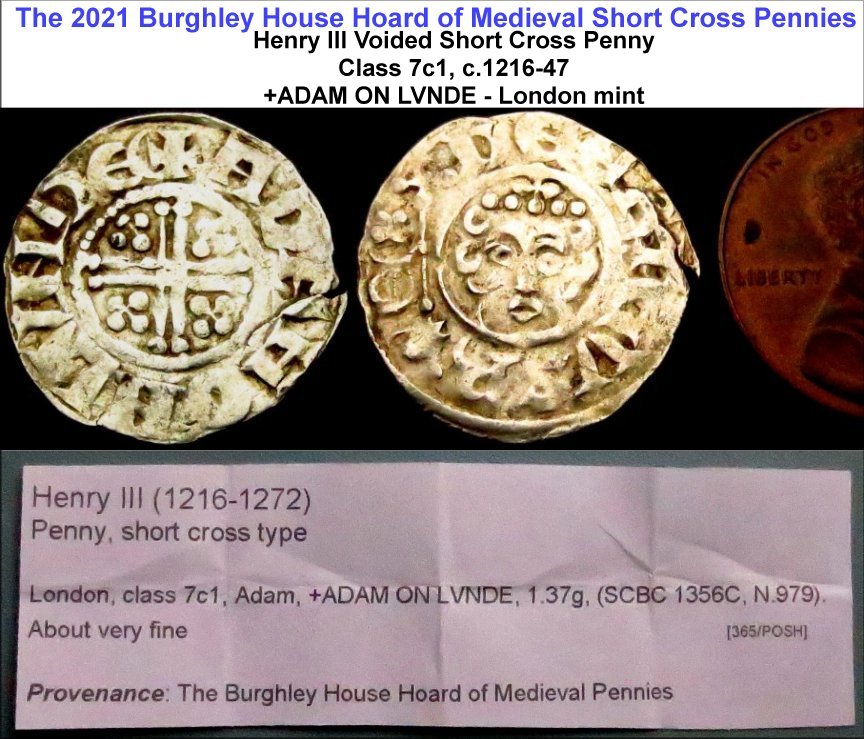
WMH-9351: **THE BURGHLEY HOUSE HOARD** Henry III Medieval Hammered
Silver Voided Short Cross Penny. Class 7c1, +ADAM
ON LVNDE - London mint.
S.R.1356C. In
2021, going into 2022, one of the largest hoards of early Plantagenet coinage
was discovered in the grounds of the famous Burghley
House estate - a Grade 1 listed English Country House (resembling a very large
stately home) in Stamford, Lincolnshire. Lord Burghley - David
Cecil, later the 6th Marquess of Exeter - famously won
the gold medal in the 400-metre hurdles at the 1928 Summer Olympics, as
depicted in the film, Chariots of Fire, with extensive training throughout the
1,400 acres of his estate. He famously
got one of his grounds men to lay out his hurdles on the estate with an upright
matchbox on each one, the aim being to not only clear each hurdle, at
full speed, but to just clear each hurdle, at full speed, and further, to just clear each hurdle,
at full speed, at a specific point
on each hurdle with the leading leg with hopefully all matchboxes being
successfully dislodged and hurdles intact!
The
hoard consisted of approximately 350 Plantagenet pennies and halfpennies,
ranging from Henry II to Henry III. The
hoard deposition is estimated to the very early 1240's, based on the latest
coins in the hoard - class 7c pennies of Henry III. The find was handed over to the state via the
PAO scheme. After an inquest, the hoard
was eventually disclaimed and returned to the finder. See here for the story in
print. An
interesting coin, being struck immediately prior to the when the hoard was
deposited in the ground. As such,
we must assume that this coin hadn't had time to become worn, damaged etc
through circulation, thus was very close to being as issued by the mint. An opportunity to acquire a
coin from within a secure hoard context.
£225
Provenance:
ex Burghley House 2021/2 Hoard
Voided Long Cross Provincial mints:
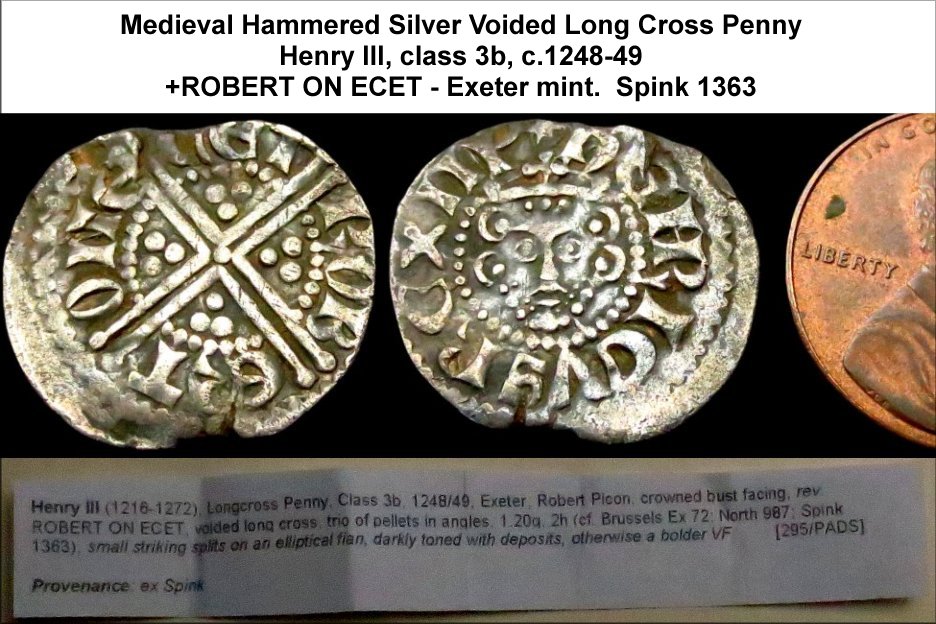
WMH-9072:
Henry III
Medieval Hammered Silver Penny. +ROBERT
ON ECET – Exeter mint. Voided long cross. Class 3b, 1248-49. S.R. 1363. Struck on an irregular flan
but a good VF grade and from this rare mint town. £195 RESERVED (J.K.20-1-25 Lay-Away)
Provenance:
ex
Spink
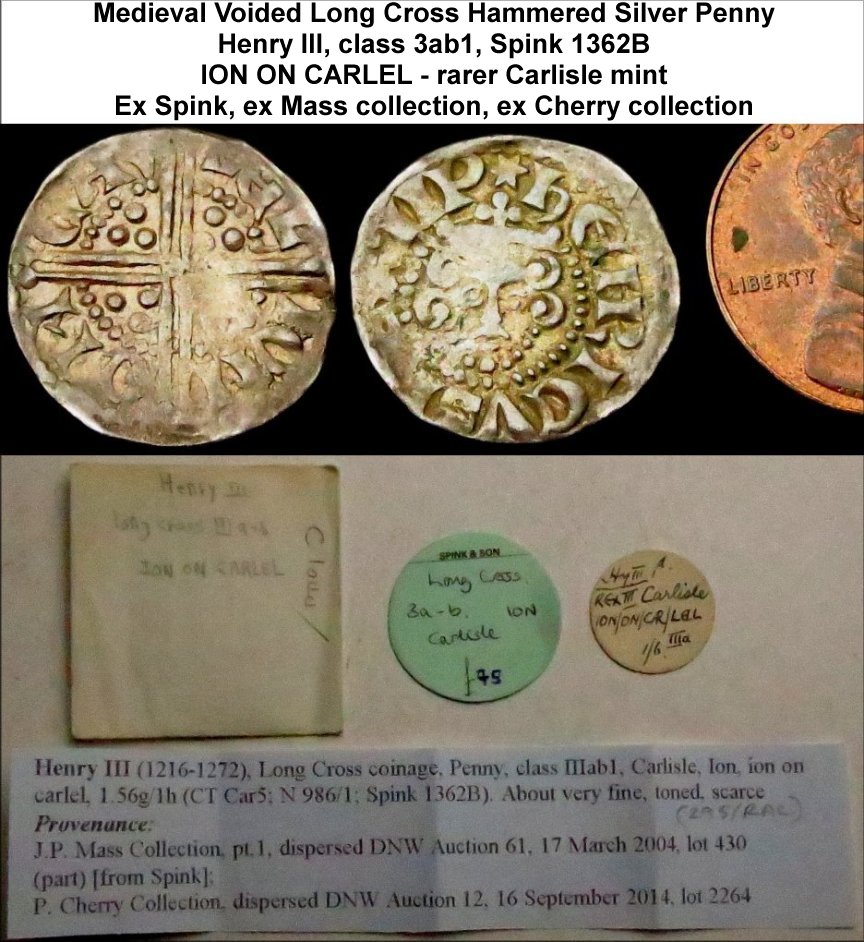
WMH-9027: Henry III Voided Long
Cross Hammered Silver Penny. Class 3ab1 with the transitional bust, initial mark
(star) 3: ION ON CARLEL - Ion working out of the Carlisle mint. S.R. 1362B. Toned, abt VF, from a rarer
mint town and with excellent provenance.
£245
Provenance
(Unidentified older ticket)
Ex Spink (1990's, sold for
£75, sold to...
Ex J.P. Mass collection,
dispersed...
DNW (auction 61, 2004, lot
430)
Ex P. Cherry collection, dispersed...
DNW (auction 12, 2024, lot
2264)
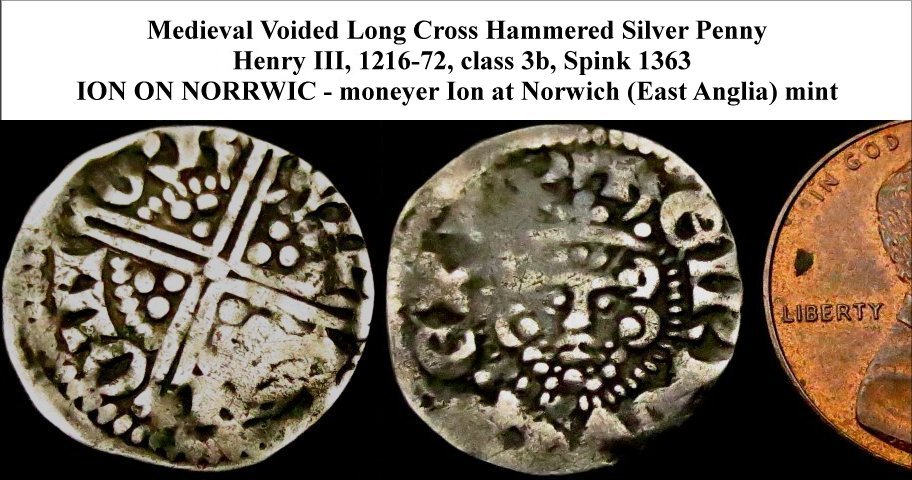
WMH-7320:
Henry III Voided
Long Cross Hammered Silver Penny. Class 3b – earlier Phase II “Provincial” issue, 1248-50: ION ON
NORRWIC – Norwich mint.
S.R. 1363.
A somewhat unusual reading of this rarer mint town. Sold with an auction slip
and a collector’s cabinet label.
£155
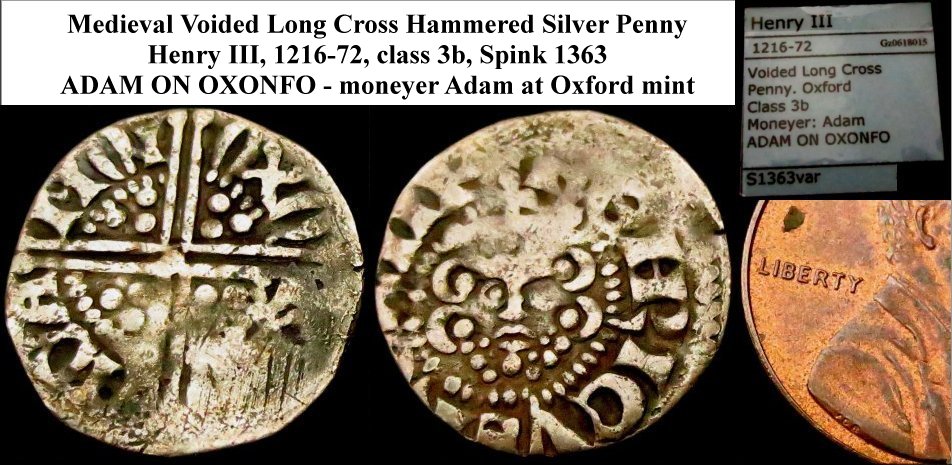
WMH-7321:
Henry III Voided
Long Cross Hammered Silver Penny. Class 3b – earlier Phase II “Provincial” issue, 1248-50: ADAM ON
OXONFO – Oxford mint.
S.R. 1363.
Rarer mint town. £155
WMH-7366:
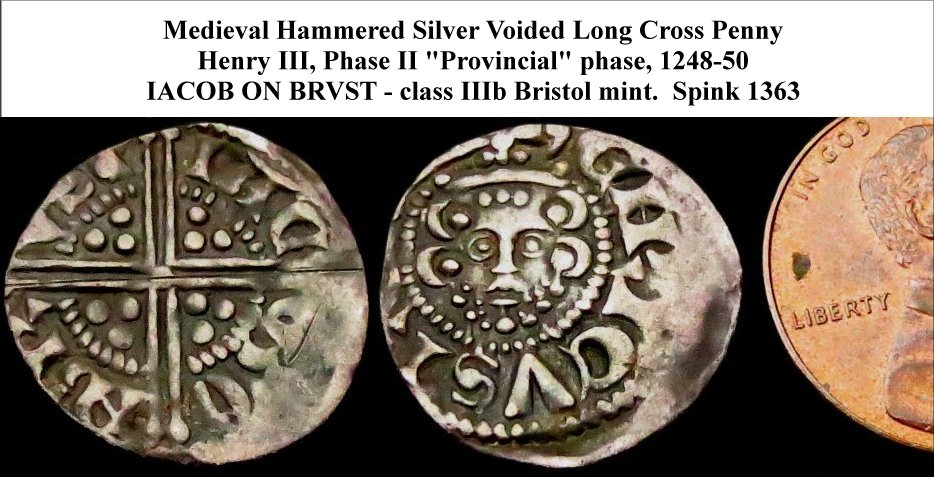
Henry III
Medieval Hammered Silver Voided Long Cross Penny. Phase II “Provincial” phase of 1248-50
only. Class IIIb, Bristol mint – IACOB ON
BRVST. S.R. 1363. A very rare Henry III VLC
mint and even better - excellent grade.
£230
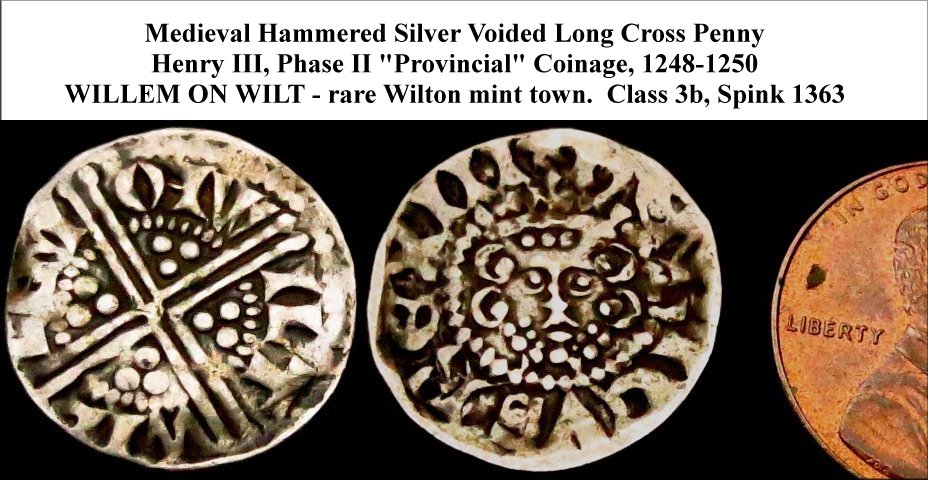
WMH-7386:
Henry III Voided
Long Cross Penny. Phase II
“Provincial” coinage, 1348-50: +WILLEM ON WILT – rare Wilton mint town. Class 3b, S.R. 1363. You will see many hundreds of London, Canterbury mint etc coins before you’ll see a
Wilton mint. Rare coin. £165
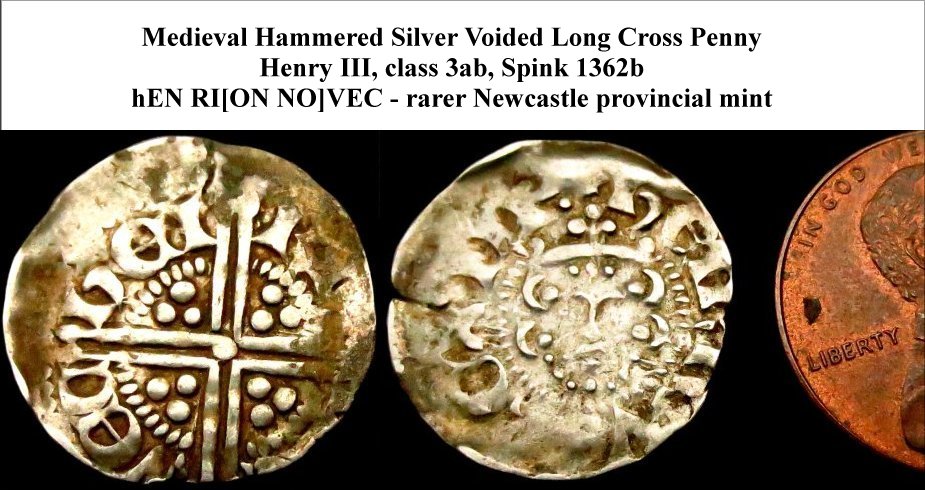
WMH-7628:
Henry III
Medieval Hammered Silver Voided Long Cross Provincial Penny. Class 3ab, c.1248-50, rarer
Newcastle mint – moneyer
Henri. S.R. 1362b. £125
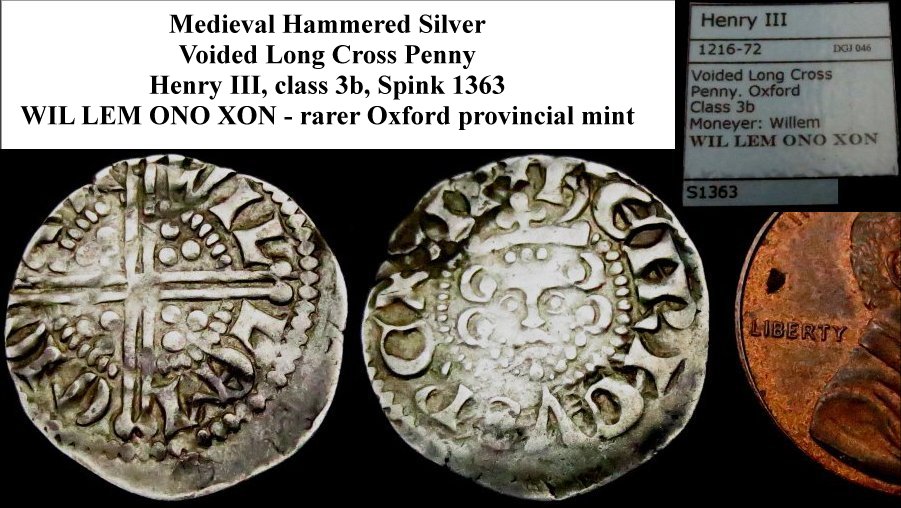
WMH-7630:
Henry III
Medieval Hammered Silver Voided Long Cross Provincial Penny. Class 3b, c.1248-50, rarer Oxford mint – moneyer
Willem. S.R. 1363. £165
WMH-7775:
Henry III Voided
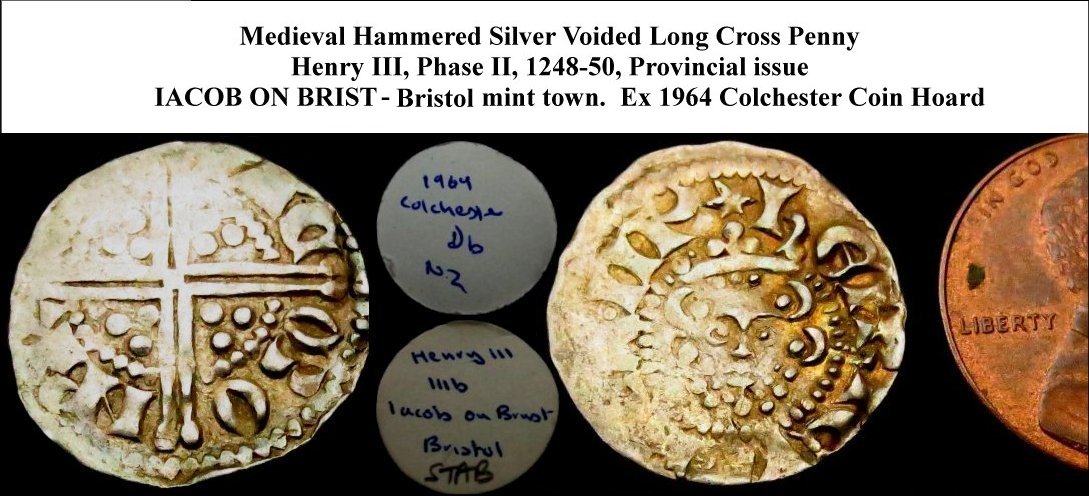
Long Cross Hammered Silver PROVINCIAL Mint Medieval Penny. Phase II, class IIIb,
mint and moneyer: IACOB ON BRIST – Bristol mint. S.R. 1363. Ex Colchester Coin Hoard of
1964 so excellent provenance.
£185
WMH-7777:
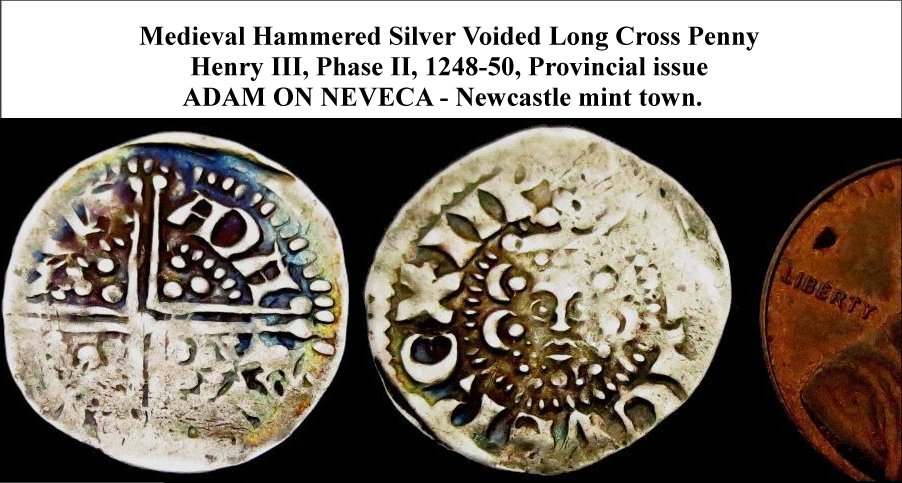
Henry III Voided
Long Cross Hammered Silver PROVINCIAL Mint Medieval Penny. Phase II, class IIIb,
mint and moneyer: ADAM ON NEVECA – Newcastle mint. S.R. 1363. £155
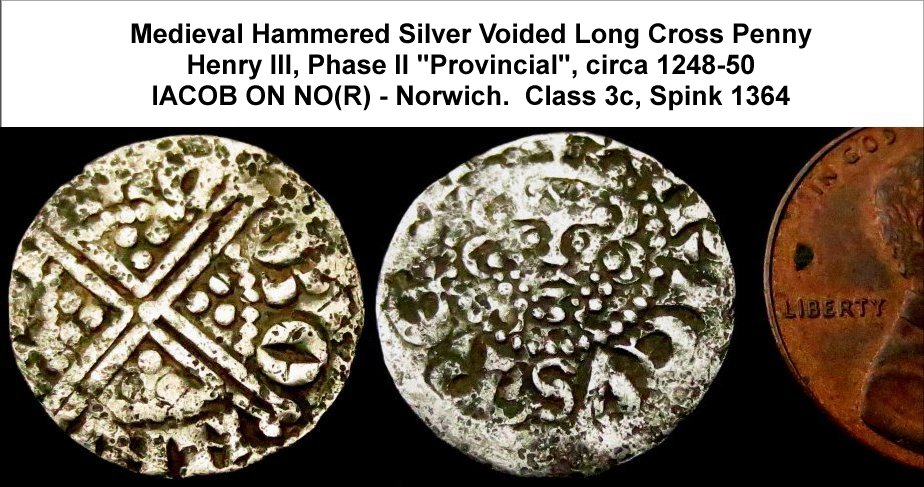
WMH-8110: Henry III Medieval
Hammered Silver Voided Long Cross Penny. Phase
II "Provincial" issue of 1248-50.
IOCOB ON NO[R] - Norwich (East
Anglia) mint. The first use of a neck on
the portrait - class 3c, S.R. 1364. Easily distinguishable from
the later, more common Phase III (post-provincial) issue by the lack of an
obverse sceptre. Uncommon mint. £95
Rarer Voided Long Cross Continental Imitations:
WMH-7632:
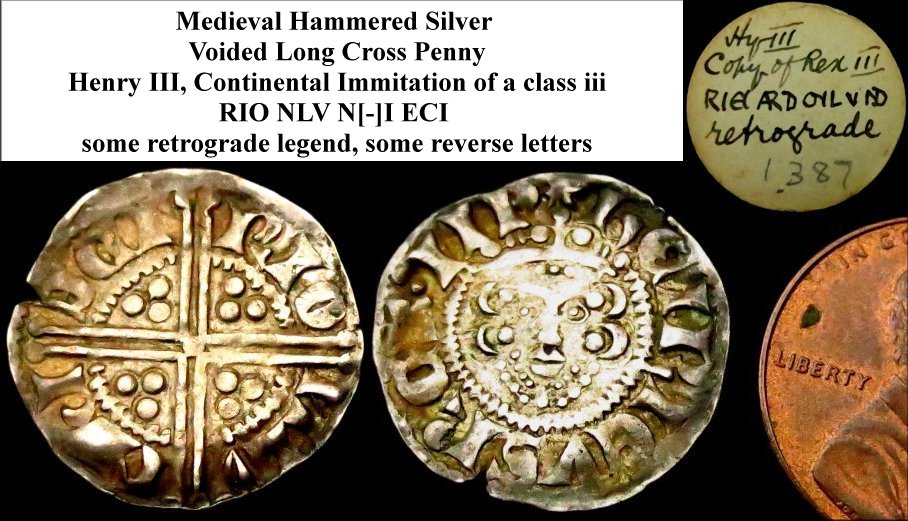
Henry III
Medieval Hammered Silver Voided Long Cross Provincial Penny. Class 3, c.1248-50, rare Continental Imitation. Obverse: *hENRICVS
REX obverse with a couple of suspect letters and a missing ligation
connective. The style of the portrait is
most impressive. The reverse is most
interesting in that on the whole, it is a retrograde reading of RICARD ON LVN. However, some legend is not retrograde, ligation connectives are missing, some letters are reversed
and we even see inverted lettering. Sold with a very old ticket.
Worthy of research. Rare. £265
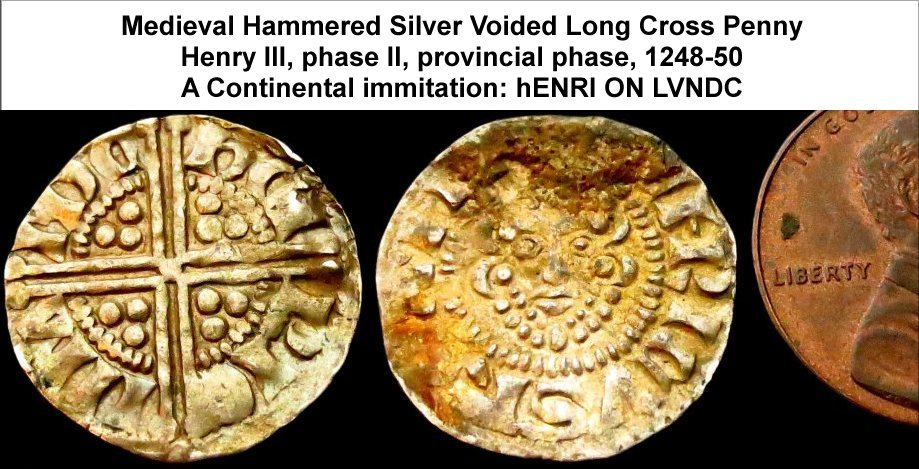
WMH-9285: Henry
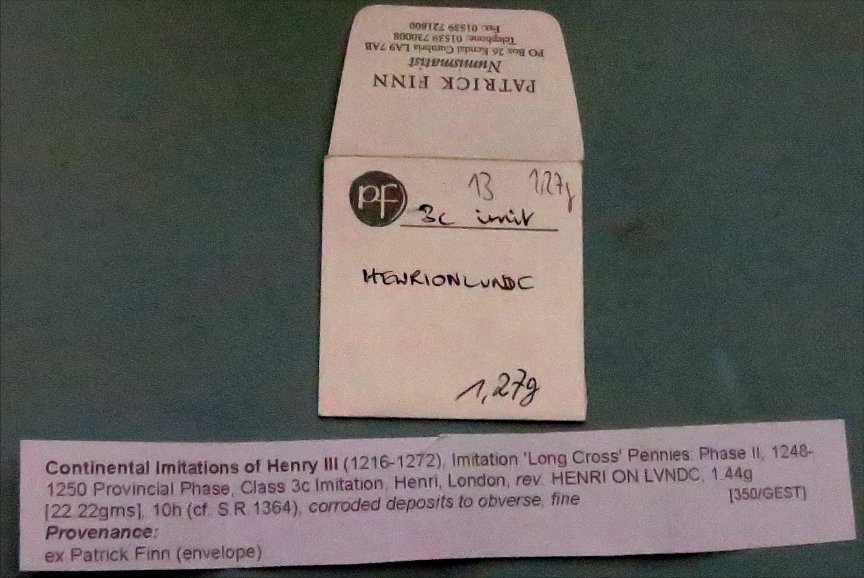
III Hammered Silver Penny - a Contemporary Continental Imitation. Phase II, 1248-50, Provincial Phase. Class 3c imitation: hENRI ON LVNDC - London mint. Imitation voided long cross
pennies were imported into England during, and shortly after the
reign of Henry III. They were good
copies of the originals, very difficult to spot at the time, but often
lightweight and not up to the .925 silver standard. The famous 1908 Brussels' Hoard contained
many
examples, suggesting the imitations were struck on the Continent, illegally passed
into English circulation, hoarded for whatever reason, and then ironically sent
back to the Continent. These imitations
are rarer than the Regal issues with several reference books dedicated to them,
not least the excellent Sterling Imitations of Edwardian Type by Mayhew,
1983. This one attractively toned
indicating it was likely once a hoard coin.
Excellent provenance. £135
Provenance:
ex
Patrick Finn
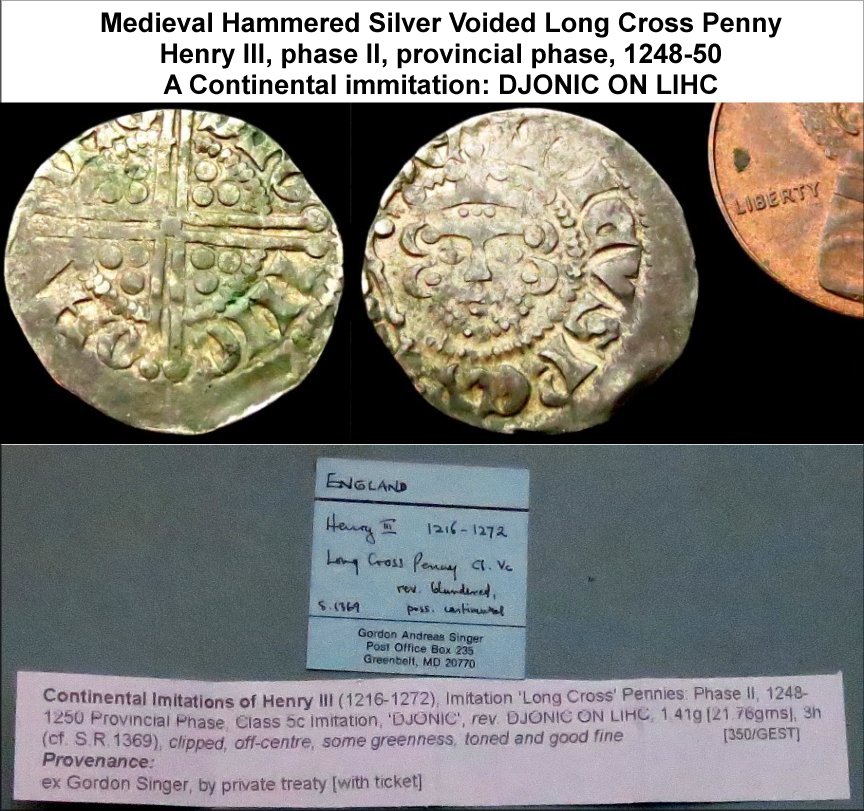
WMH-9286: Henry
III Hammered Silver Penny - a Contemporary Continental Imitation. Phase II, 1248-50, Provincial Phase. Class 5c imitation: DJONIN ON LIHC. Leicester mint signature, which would be
impressive if it were a genuine Leicester issue!! Imitation voided long cross pennies were imported into England during, and shortly after the
reign of Henry III. They were good
copies of the originals, very difficult to spot at the time, but often
lightweight and not up to the .925 silver standard. The famous 1908 Brussels' Hoard contained many examples,
suggesting the imitations were struck on the Continent, illegally passed into
English circulation, hoarded for whatever reason, and then ironically sent back
to the Continent. These imitations are
rarer than the Regal issues with several reference books dedicated to them, not
least the excellent Sterling Imitations of Edwardian Type by Mayhew, 1983. This one toned. The ticket does say clipped but I'd suggest
the coin is round and was just off-struck.
Excellent provenance. £135
Provenance:
ex
Gordon Singer
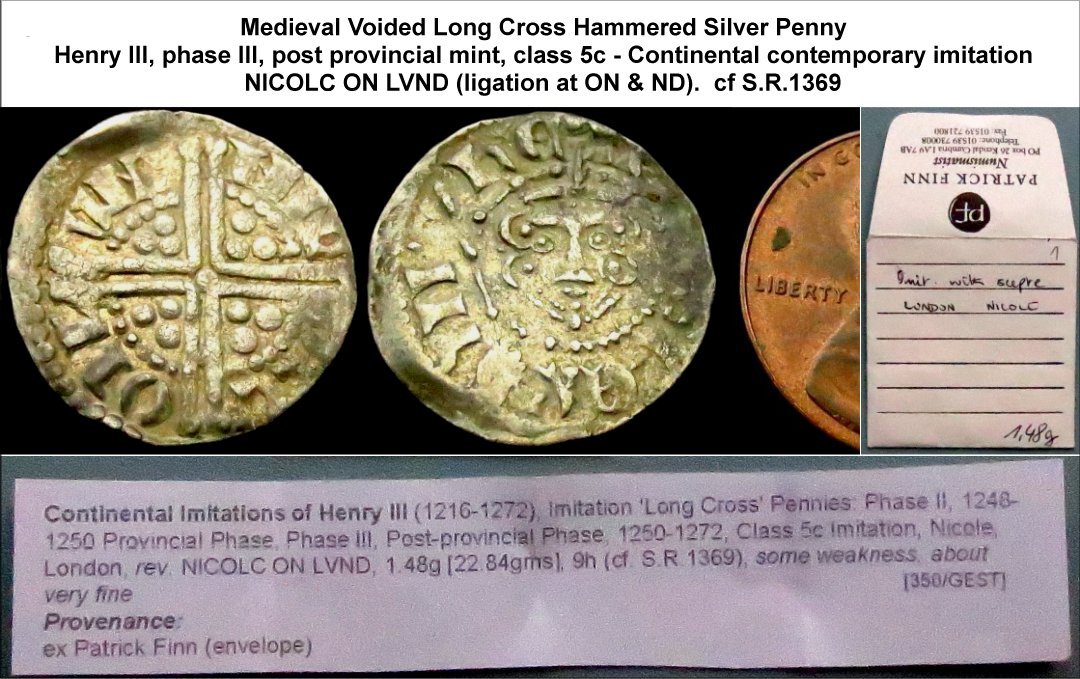
WMH-9341: Henry
III Medieval Hammered Silver Penny - a Contemporary Continental Imitation. Phase III, 1248-50, Post Provincial Phase. Class 5c imitation: NICOLC ON LVND - London mint. Imitation voided long cross
pennies were imported into England during, and shortly after the
reign of Henry III. They were good copies
of the originals, very difficult to spot at the time, but often lightweight and
not up to the .925 silver standard. The
famous 1908 Brussels' Hoard contained many examples,
suggesting the imitations were struck on the Continent, illegally passed into
English circulation, hoarded for whatever reason, and then ironically sent back
to the Continent. These imitations are
rarer than the Regal issues with several reference books dedicated to them, not
least the excellent Sterling Imitations of Edwardian Type by Mayhew, 1983. This one attractively toned indicating it was
likely once a hoard coin. Excellent provenance.
£135 RESERVED
(M.He.2-6-26 Lay-Away)
Provenance:
ex
Patrick Finn