George III (1760-1820) Read about George III
Silver
Shilling
WG-7302:
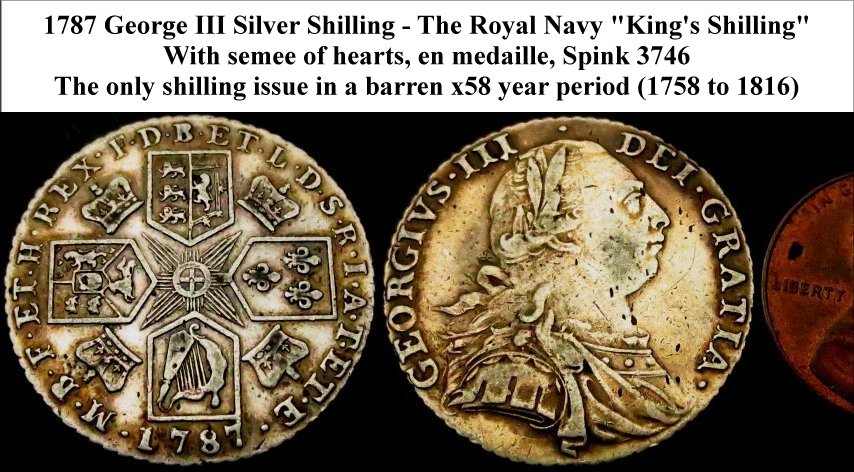
1787 George III
Silver Shilling. With semee of hearts, en medaille die orientation, S.R.
3746. Sometimes referred to as “The
King’s Shilling” because after George II issued his last shilling of 1758 and
before George III issued his “Last” coinage shilling of 1816, this 1787 was
literally the only new shilling in town.
When conscripts were offered the King’s shilling to sign onboard a ship,
it would invariably have been one of these that they received to bind the
deal. £98
Maundy
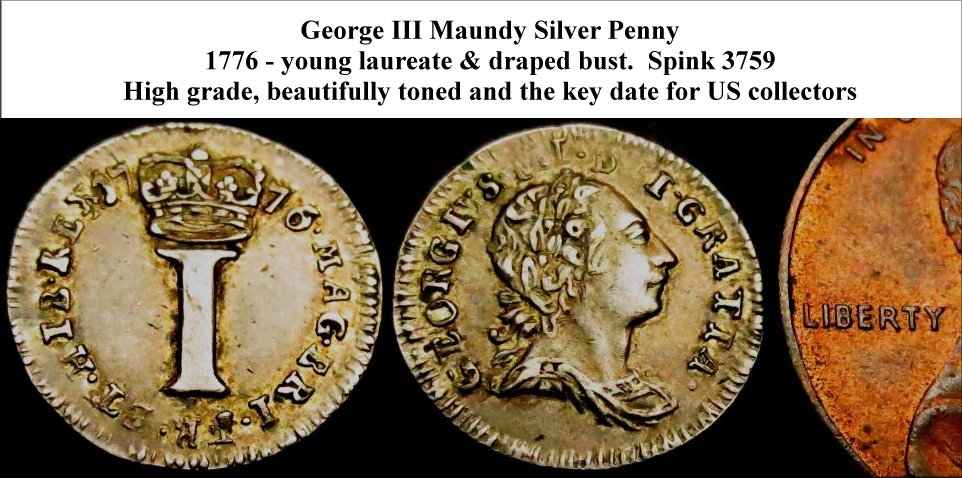
WG-6972: 1776 George III Silver
Penny. S.R. 3759. Beautifully toned, high
grade and the key date for US collectors. £125
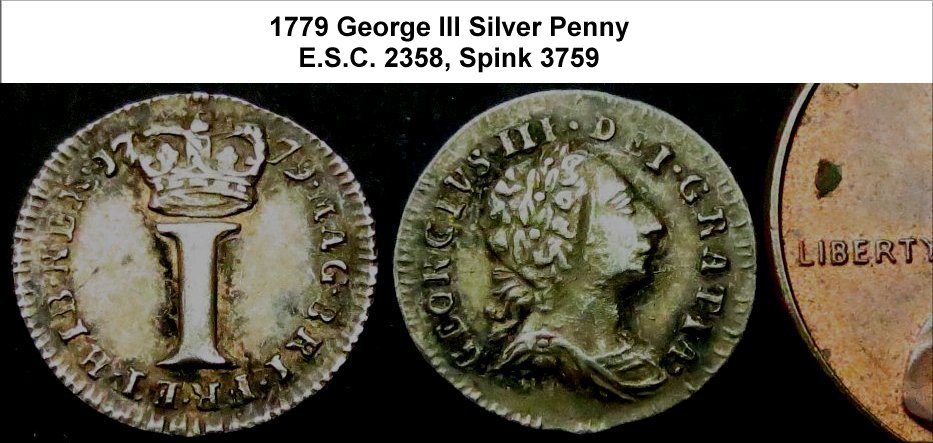
WG-6025: 1779 George III Silver
Penny. ESC 2358. £59
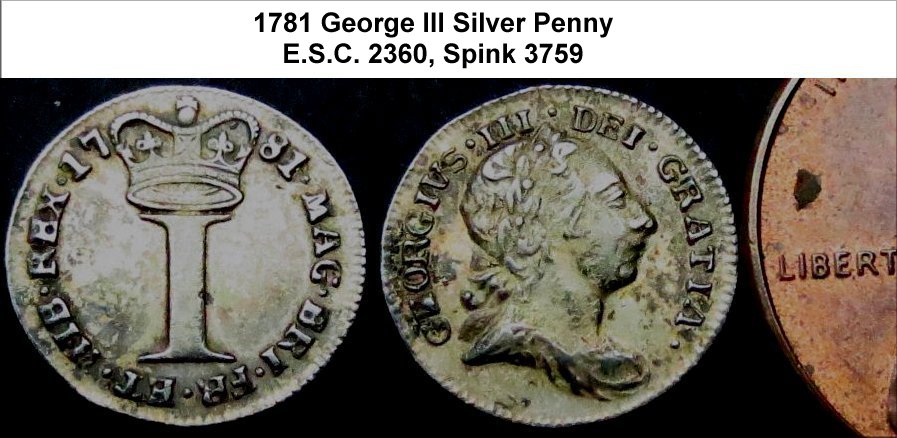
WG-6026: 1781 George III Silver
Penny. ESC 2360. £65
Copper etc
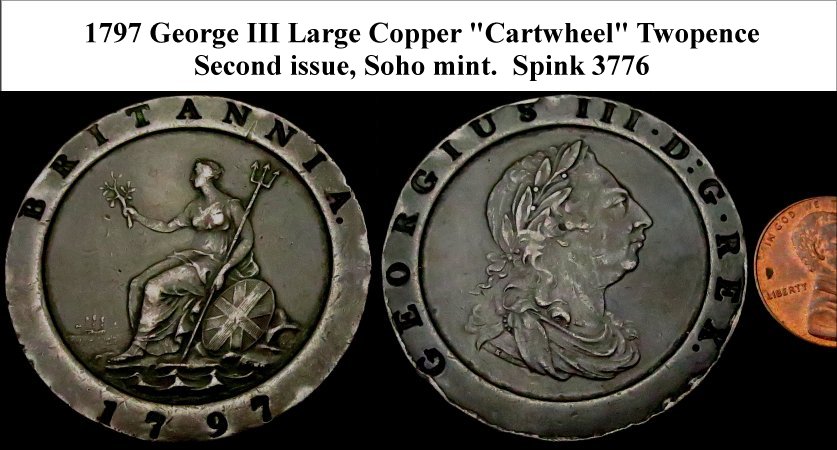
Cartwheel Twopences
WG-7288:
1797 George III
Large Copper Cartwheel Twopence. Second issue, Soho mint, S.R. 3776.
Nice grade. £85
Pennies
Halfpennies
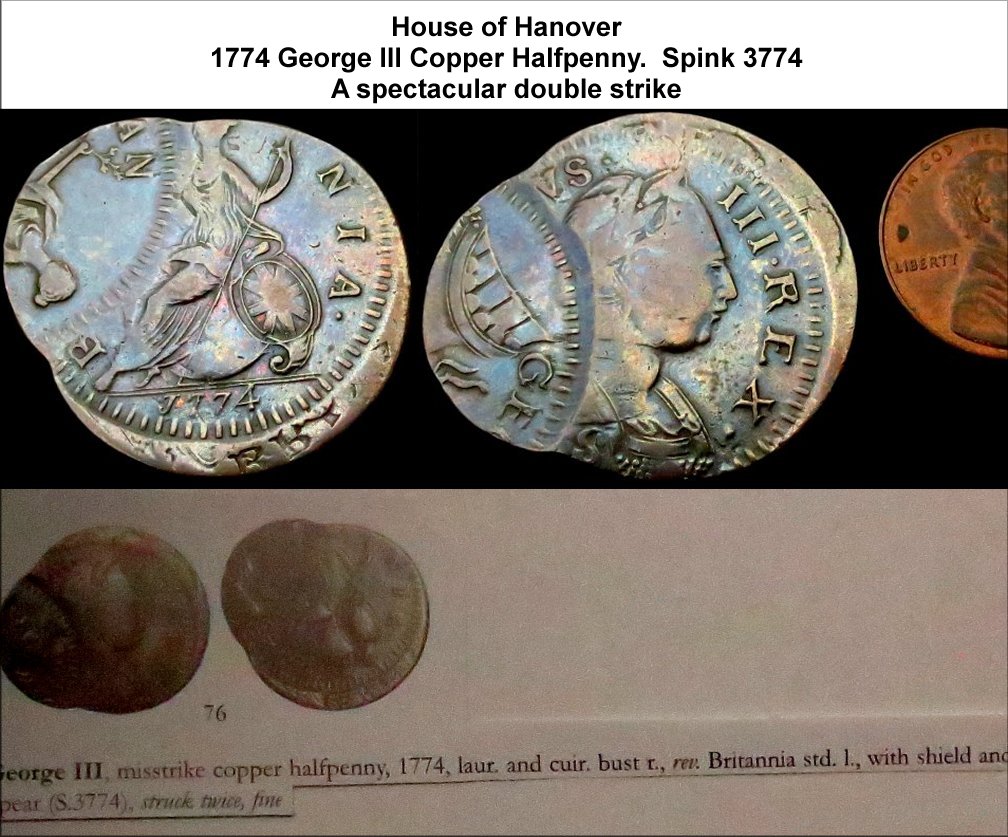
WG-8106: 1774 George III Halfpenny
Error - you'll not find another like this one! First issue, Tower (London) mint although actually not as
this is a contemporary counterfeit, or Non-Regal as some like to call
them. The dies for this coin were of
decent quality, as was the metal and the amount of metal used - typically,
these contemporary counterfeits were at least 50% underweight and with less
than pure copper. That's how they made
their money - many halfpennies that were not worth a halfpenny in metal (or
indeed, not even worth a farthing in a lot of cases) passed into circulation as
halfpennies brings in a lot of money.
This coin weighs 8.36 so really, only about a gram or so underweight,
which is negligible. The dies would have
required someone with skill, the right equipment, and time to make. That doesn't sound like a good business model
for your average get-rich-quick late 1700's counterfeiter. There is some speculation that Tower Mint
employees were moonlighting at the mint itself, churning these counterfeits
out, as we do see these high execution, good weight and metal contemporary
counterfeits turn up every so often - perhaps the official dies were securely
locked away but all the other equipment was there for the using? All that is very interesting but the really
exciting thing about this coin, the elephant in the room, is the spectacular
misstrike. The blank, or planchet, has
been correctly struck by the obverse and reverse dies at the correct 180 degree
die rotation (your average counterfeiter paid little attention to die rotation
so another indication that something different was going on here) but before the
coin was able to fall into the box containing finished coins, it had been
caught by the dies and struck a second time, being rotated in the process by 90
degrees, and only the bottom 25% of the coin struck again. Once again, this second strike was at the
correct 90 degree die rotation. The
result is what you see in the image.
That much is clear but it is not the full story: if you look carefully
under the date, you'll observe an inverted or retrograde and incuse BRI
for BRITANNIA, meaning that this coin was actually a brockage - a previous coin
retained in error in the die meaning that when the this blank came along, that
trapped coin acted as the die, hence the reverse and incuse nature of the coin
struck by that coin. There are other
such indicators of a brockage on both sides of this coin. These misstrikes do very occasionally happen
- even in those days there was enough quality control to notice and pull out
something as obvious as this coin - but to have one escape quality control and
to have the date present is extremely rare, not to mention desirable. This coin has everything going for it! £495